
Category: News

  • We are all trying to get a Need met

    We are all trying to get a Need met

    Every behaviour has a need behind it. 
    Our most fundamental needs in relationship are that we matter, that we are safe and stay connected.
    We all have needs, there is no conflict. Needs are needs. The problem is the solutions we want others to live in order to get our needs met. There is a never a conflict of needs, only a conflict of solutions!

    Within my family we have members who are vaccinated and those who are unvaccinated. This may sound familiar! Both worry about the other. The vaccinated want the unvaccinated to get vaccinated (solution) out of fear, worry and concern for their health and safety (need). The unvaccinated want the vaccinated not to take the booster or get vaccinated at all out of fear, concern and worry. The needs in this case are safety; physical safety, and autonomy. Each family member has the same need, yet the solutions cause conflict. The solution for the vaccinated is for the unvaccinated to get vaccinated. The unvaccinated are worried about the implications on their health so their solution is to not be vaccinated. We generate solutions as a way of trying to relieve our fears.
    It makes for difficult conversations, as you may well have experienced in the last couple of years! For some exclusion has been the solution that was chosen for them.
    Furthermore solutions are often embedded in bigger values differences which makes it even difficult to resolve.

    What if we could find a different way of resolving conflict? What if we could enhance our relationships whilst resolving conflict? Remember there is only a conflict of solutions NOT needs. 

    Let’s take a look at needs and for a moment and expand Maslow’s Hierarchy of Needs and Max Neef’s Theory of Needs. Needs can be grouped into a number of categories such as:

    • Safety and Health
    • Interdependent/Connection
    • Honesty
    • Rest and Play
    • Peace
    • Physical well being
    • Meaning
    • Autonomy

    Within each category there are more needs. For instance under:

    • Safety and Health
      • Physical
      • Psychological
      • Emotional
      • Safety
      • Security
      • Stability
      • Support
      • Trust
      • Warmth

    Now come back to the example above. Let’s unpack a new way of negotiating that strengthens the relationship, the self esteem of each other and resolves conflict. Win – Win!
    Here’s how. 

    1. Define the Needs – in the family example above the need for the unvaccinated is Physical Health and Safety. The need for the vaccinated is Physical Health and Safety, and freedom/autonomy. (see a needs chart below to help decipher the needs)
    2. Brainstorm Solutions – often we impose solutions onto the other, rather than thinking beyond our own ideas. Many couples consist of one person vaccinated and one unvaccinated, how did they do that? Discussion, talking, respect. So let’s simply generate as many  crazy ideas as you can think of do not censor them. Get the butcher paper out, and write them down, as we usually can’t stay auditory very long, as our nervous systems get overwhelmed. Go visual and jot down all those random ideas.  Remember the ideas are not up for discussion yet! Kids are great at this as they are creative and don’t censor ideas.
    3. Evaluate Solutions – keep in mind it has to met both parties needs. This is a no-lose approach. So the solution has to work for both. Evaluate, compare and analyse until they fit. You may have to come back to this if things get heated.
    4. Choose Solution(s) – There can be more than one solution that meets both needs.
    5. Implement Solution(s) – decide together when and how the solutions mutually chosen are going to be implemented, with a date to check in to see if the solutions are still working for both.
    6. Check Results – make a date to check in and how each other is going with the decisions that were made, is it still working for each and satisfying that need trying to get met?

    Now your turn.
    Find a conflict and take the time to discover the needs trying to be met.  (see the Needs sheet below). If uncertain and feel as though you have come up with the solution, then ask yourself this question: What would that then give me? And then what would that then give me? Keep going until you find the need.
    If the issue is with someone else you may like to try to listen for needs in the other and feed them back. ie Is it that you value…..safety, fairness? It sounds like physical health is really important to you?

    An important first step is self empathy. How can I begin to give myself this need, rather than expecting the other to give me it?


    I remember years ago, I had been a single mum for quite awhile as there was no shared care, due to my son’s dad working away. It was really hard. I worked interstate teaching, juggling being a mum, dealing with a toxic relationship and finding someone to care for my son when I was away, as I did not have any family where we lived. There was a point I really wanted my ex-partner to acknowledge what I had done, all the effort I had put into raising our son. Knowing our, at times difficult relationship, I decided I probably wasn’t going to get that from him. So I stopped and investigated what the need was that was trying to be met. In this case it was ‘acknowledgement’  I decided I would give that to myself, and really appreciated how much it had taken to be a single mum. That part of me that was yearning for acknowledgement was deeply met and delighted. Years later at our son’s high school graduation my ex-partner sided up to me and said “you’ve done an amazing job”. Bingo there it was. My internal acknowledgement reflected outwards. I still smile to this day as to the effect of first giving myself self empathy.


    Can you give yourself what you are wanting the other to give you first?

    Then can you offer empathy to the other, to discover what their needs are that are trying to be met? Developing the ability to stand back and negotiate based on needs is adulting, is promoting respect, mutuality, fairness, justice and sensitivity, elements within which relationships thrive within.
  • Life Never Gives Up On You

    Life Never Gives Up On You

    Life Never Gives Up On Hearing Our Yearning
    What would it take for you to believe in magic again?Late last year I had an experience whilst travelling interstate for a very brief time, where I met someone, it was an unusual experience, one that shocked both of us throughout the day we spent together, as we realised the person standing in front of us was all we had asked for. I had a list!! You see, I had had this deep yearning for a long time to be met in a way that deeply nourished the person I am. It was a moment of seeing oneself in another, beyond the minds list, or an idea of how it should look like or plans for the future. 
    We laughed, had incredible adventures, shared stories, ate great food, swam naked in rivers and the sea, snuggled and read by the fire, danced until we couldn’t, walked in rainforests, along sea cliffs, in heathlands and talked, asked deeply personal questions of the other and made love……

    Yet what astonished me the most was that my deepest yearning had been heard!
    Even if I felt I had given up on believing, life never did.

    It was a big wake up call for me as to how much I had given up on believing in the magic and what I need to do to nourish hope in my life again.

    It has been a very rough road, like many of you have experienced, over the last couple of years and part of me had lost hope, lost my vision, lost my dreaming.

    I was reminded that life never gives up hearing our hearts yearning.

    Another example of this is, a couple of days after Christmas, I met a very distressed young man on the streets asking me to buy cigarettes for him as he was too young. He needed more than cigarettes. I stopped to really see this man who was sleeping on the streets and acknowledged it looked like he needed more than cigarettes, that he needed a hug to start with, he agreed. After a huge hug, tears and his shaking subsiding a little, I took him home to have breakfast together and hang out with my family for the day. He beat my son at chess and us all at pool!
    Throughout the day I would simply sit and talk with him to find out more about him, no agenda, no hurry, just curious. I just wanted him to feel safe again. At the end of the day we drove him to his friends to sleep for the night, checked in with his mum so she knew where he was. Subsequently he has resolved things with his mum and living back at home.What I was deeply reminded of was my own struggle as a mum and my son’s struggle in this young man. I could see my own life in his situation and I believed that the situation could change, as I had been there and knew given support this too shall pass. I could be his little bit of magic for that day. 

    We are all simply walking each other home in some way.
    How can we begin to really see another in ourself and each other, to feel what is needed? What would it take us to feel deep empathy towards each other and take action? 

    Therefore my goal for 2022 is to nourish dreaming again, love, passion, poetry, art, spontaneity, hope for living, to reclaim the magic from the heart.

    What would it take to believe in your dreams again, to give them room, to nurture them, know they are heard and trust the rest will take care of itself? 


  • Mental Health in a time of Covid (and the Polyvagal Ladder) Podcast

    Mental Health in a time of Covid (and the Polyvagal Ladder) Podcast

    Mental health has become a major casualty of the Covid pandemic that has swept across the globe and been responsible for rolling lockdowns throughout Australia restricting personal freedoms, social contact and the ability to prosper financially. No one is exempt from this unprecedented event and the anxiety, depression and anguish wrought is having a major effect on the mental health and wellbeing of our communities.

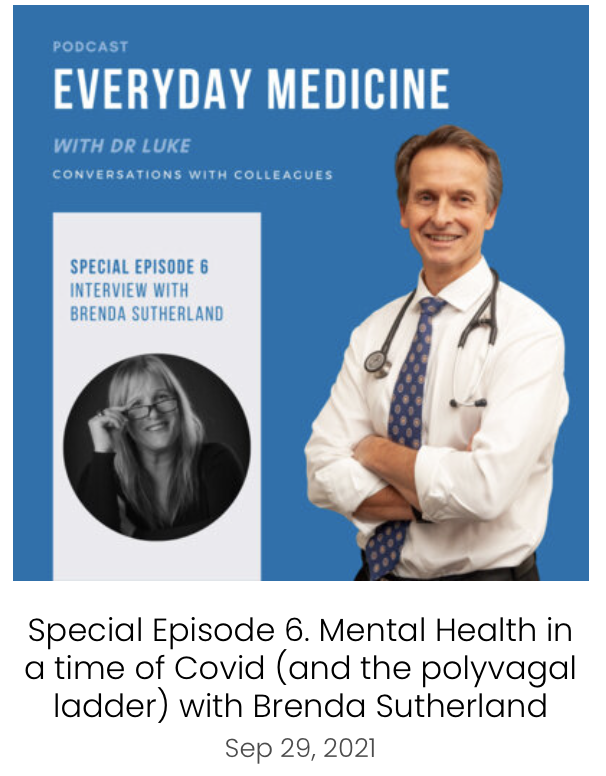
    Dr Luke Crantock has a conversation with therapist, Brenda Sutherland founder and director of The Awakening Group to discuss the indicators that a patient or friend may be experiencing, the evolving mental health difficulties and learning methods for shifting patients holistically out of collapse.Brenda teaches us about the polyvagal ladder and how to use an understanding of this insight to instructively and empathically assist our most vulnerable patients.

    Brenda’s extensive knowledge of the human mental state in distress and happiness and her work with Bessel van de Kolk, Dr Stan Tatkin and Byron Katie have placed her in an outstanding position to guide us on this subject.

    Please enjoy the conversation.


    CLICK HERE TO LISTEN


    Dr Luke Crantock MBBS, FRACP, is a gastroenterologist in practice for over 25 years. He is the founder of The Centre for GI Health, based in Melbourne Australia and is passionate about educating General Practitioners and patients on disease prevention and how to manage and improve their digestive health.

    References:

    http://awakening.com.au/lms/2021/08/24/ventral-vibes-project/

    Mental health services in Australia, COVID-19 impact on mental health

    Weekend Australian – Aug 28-29 pages 1&6


  • Ventral Vibes Project

    Ventral Vibes Project

    Ventral Vibes Project

    Due to the enormous challenges and changes we are currently facing on a daily basis, our nervous system is overwhelmed, as we move from brain automation of daily tasks to refocusing on adjusting to new changes  in our everyday lives. One day we are free to go to work and get that coffee on the way, whilst saying chatting to people we see each morning to the next day we are in lockdown, and a sense of disconnection, disappointment and discombobulation. The constant changes and restrictions mean that our nervous system tries to find ways to adjust and survive, adaptions that are not always supportive.

    Stephen Porges’s ‘Polyvagal theory’ outlined survival states our autonomic nervous system moves within; Social Engagement (Ventral Vagal new vagus nerve: branch of the Parasympathetic vagus nerve), Sympathetic (fight/flight) and Dorsal Vagal (collapse/freeze/stuck on off). These states are all in service to our survival. It is essential that we befriend, listen to and understand our nervous system yet we often feel overwhelmed with what is happening within us, so much so we become stuck and difficult to move freely out of certain states. The majority of the time we are in resistance to our nervous system which creates an enormous about of inner turmoil.

    Deb Dana developed ‘The Polyvagal Ladder’ to help identify where we are in our nervous system response, what the experience is of being in that zone and understand how to move in and out of states. In other words we are educating our nervous system as to its responses, making friends with it so we don’t get stuck in particular states, and demonstrating how it can fluidly change emotional states. In this sense we become masters of our nervous systems rather than a slave.

    “The great thing then, in all education, is to make our nervous system our ally as opposed to our enemy.” William James (1914, Habit)


    A Little Science: The Autonomic Nervous System

    Simply the autonomic nervous system includes two branches:


    1. The Parasympathetic Branch The Vagus Nerve, the “wanderer” has two branches: Ventral Vagus (new vagus) and the Dorsal Vagus (old vagus).
      • This part of the nervous system travels from the brain stem at the base of the head, and travels down through the lungs, heart, diaphragm, and stomach and upward connecting with nerves in the neck, throat, eyes, and ears, to form the “face-heart” connection – “the compassion nerve”.
      • Ventral Vagal (new vagus) is a state of receptivity, social engagement, self and co-regulation, connected, in the flow and a sense of vitality. We feel safe, connected and alive is this state.
      • Dorsal Vagal (old vagus) is a Freeze response whereby we collapse, faint, or fawn death for survival. Often when a situation becomes too overwhelming to fight or flee we collapse. Animals freeze when captured to fain death from a predator to ensure they do not feel pain, and in many cases survive when the predator lets go, thinking their prey is dead. This state can be experienced in a number of ways including feeling numb, immobilised, helpless, lifeless, a sense of hopelessness, lack of motivation, depression, and giving up. We are stuck on off. This maybe a very familiar experience at the moment considering the overwhelming circumstances many people are experiencing.

    2. The Sympathetic Nervous System is mobilised in response to threat, involving the Fight or Flight responses, which could be further heightened for those who have a background of trauma in their lives.

    2019 DDP International Conference www.DDPNetwork.org

    ‘Engaging the Rhythm of Regulation A Polyvagal Theory Guide to Safety and Connection’ by Deb Dana, LCSW, DDP International Conference September 9, 2019  debdanalcsw.com, rhythmofregulation.com

    Scoping the Internal Landscape

    Firstly, Take a moment and think back to a time in your life when you felt the most happiest, alive, engaged, connected with others, life and yourself. Write down the feelings, sensations in your body you experienced when in this state. Give it a word that summarises this state for you.

    Furthermore when in this state (finish these statements):

    • I am ……
    • The world is……

    For example: flow, connected, warm, open-hearted, curious, engaged, capable, confident, organised, motivated, passionate, at ease.

    Key word: Flow

    I am…. safe

    The World is…welcoming, filled with possibilities

    This now becomes the top of the Polyvagal ladder and your ‘Ventral Vagal Anchor’ that you can come back to anytime you like.

    Secondly, the next step down the ladder is the Sympathetic Mobilised zone. Take a moment and think back to a time in your life when you felt frightened, anxious to the point your nervous system went into fight or flight. Repeat the above process, writing the sensations, feelings and body experiences and key word down. This becomes the second rung down on the polyvagal ladder.

    For example: out of control, raging, too much, confusing, discombobulated, overwhelming, angry, confrontational, ready to run

    Key word: Chaos

    I am crazy, dangerous, toxic

    The World is…scary, unfriendly, exploding


    Thirdly, go a step further down the ladder to the Dorsal Vagal Collapse. Again take a moment and think back to a time in your life when you experienced a sense of collapse, overwhelmed to the point of numb. This becomes the bottom rung down on the polyvagal ladder.

    For example: dark foggy, stuck, silent, disorganised, out of focus, cold, numb, hopeless, helpless, shut down, disconnected.

    Key word: Darkness

    I am unloveable, invisible, lost and alone

    The World is…cold, empty and uninhabitable.


    Fourthly, take each state from above and draw an art piece. Deb Dana coined it ‘The Art Map’. This assists in cementing a somatic awareness of the states and creates the ability to be engaged with a state not engaged by a state.


    art map polyvagal

    Art Map By David Keevil from https://www.youtube.com/watch?v=M-SVdQ-CHkA


    The Four R’s:

    Here’s a few steps to help.

    • Recognize the autonomic state,
    • Respect the adaptive survival response,
    • Regulate/co-regulate into a Ventral Vagal state
    • Re-story.

    When you find yourself experiencing challenging situations:

    1. Notice where you are on the Polyvagal ladder; Ventral Zone, Fight/Flight or Dorsal Vagal Collapse.
    2. Name it
    3. Befriend the state, by turning towards it – Claim it
    4. Bring curiosity
    5. Listen for a moment to the story from the Ventral Zone, of the state – Tame it


    Moving Into The Ventral Zone

    Earth will be safe when we feel in us enough safety.” Thich Nhat Hanh

    It is not that we are continually in the ventral zone, as there are times where we will move into the other states. It is the ability to easily move back into the ventral zone. In developing our own autonomic intimacy we need a repertoire of activities, games, exercises, somatic experiences, and visual and auditory aids to utilise to assist returning in the ventral vibes zone in challenging times.

    Activation of the ventral vagus nerve is associated with:

    • feelings of care taking
    • ethical intuition that humans from different social groups (even adversarial ones) share a common humanity
    • feeling emotions that promote altruism – compassion, gratitude, love, and happiness

    What are some activities that bring you back to the Ventral Vibes Zone? Write them down. Find activities that work for you…and if you like, add to the below list.

    • dancing or movement ie hip hop,
    • music making together, collaborative art making that sync our nervous systems
    • play and imagine, dress ups, game making
    • team sports that bring us into resonance with others,
    • connection with nature,
    • eye gazing, sex/lovemaking, connecting with others helping a friend. Co-regulating games using eyes, ears/sounds, voice, and facial movements. We are wired to connect!
    • breathing exercises ie Pranayama breathing
    • touch using Betty Martin’s 3 minute game, proximity seeking exercises,
    • vocal bursts..ahhhhh, ohhhhh, hmmmm etc
    • Develop a gratitude diary

    Benefits of Autonomic Flexibility

    We are continually reshaping the autonomic nervous system and the above exercises will help. By mastering staying in the Ventral Vagal Zone we

    • Reduced inflammation and regulation of pro-inflammatory cytokines
    • Control our immune response
    • Able to Emotionally regulate our own nervous systems and others around us
    • Ability to inhibit distractions
    • Develop stress resilience

    “Reshaping practices remind the autonomic nervous system that it has an inherent knowing about how to flexibly navigate the autonomic hierarchy”. Deb Dana

    Putting it to the Test

    Now that you have mapped out your own personal Polyvagal ladder, drawn an Art Map, and selected exercises, games, connection activities that help you move freely into the Ventral Vagal state lets put it to the test. Go back to the situation you remembered that caused collapse or the Fight/Flight response and use the somatic awareness when drawing and bringing awareness to each state to move out of that state by Naming it, Claiming it through befriending it, and Taming it, that is moving back into Ventral Vagal.

    How did you go? Are there any adjustments needed? Now try another state and repeat the process.

    This is your autonomic intimacy at work and can be engaged in anytime in distress, stuck on off, or your nervous system is mobilised.

    You’ve got this!

    Please share your Ventral Vibes below.


    ___________________________________________________

    Bibliography

    Armitage, Hanae, ‘Sound research: Scientific Innovation harness noise and acoustics for healing’. Stanford University.

    Dana, Deb, Engaging the Rhythm of Regulation A Polyvagal Theory Guide to Safety and Connection, (September 9, 2019) DDP International Conference

    Hip Hop Therapy Studio (June 29, 2021) Trauma Research Foundation


  • The ‘F’ Word

    The ‘F’ Word

    Feelings! We don’t like to think about them, feel them, acknowledge them, and yet they remain, and at times completely take over our experience of ourself.

    Some people go so far as to completely try to avoid them, resulting in high anxiety. Some default to anger in the hope of gaining some sense of safety from other distressing feelings. Some leave their bodies to ensure nothing is felt. Some people drink, take drugs to escape them. Yet the fact remains – we all have feelings!


    What are Feelings?

    Dr. Bryn Farnsworth describes feelings as the conscious experience of emotional reactions. While emotions are associated with bodily reactions that are activated through neurotransmitters and hormones released by the brain. Paul C Holinger M.D. outlines a range of definitions trying to capitulate the complexities of emotions including: Sensorimotor reflexive, Sensorimotor enactive, Preoperational, Concrete operational and Formal operational.

    Much research has compared feelings with emotions and their differences, depending on emotional and cognitive development.

    If you are not a neuroscientist or neuropsychologist and you are just wanting a quick definition, the bottomline is they are ‘electrical energy’ in the body. How they move, or get stuck in the body is the key to being a slave to them or being a master of them.

    Mastering Feelings

    What to do with feelings is the real mastery!

    Firstly, the mind works vigilantly looking outwards for a way to get rid of these feelings, resulting in feelings being resisted, which in turn locks them in the body as energy, pain and anguish. We try to change our environment, the people around us, our mind etc, yet feelings remain. Literally what we resist persists!  Turning the mind inwards means there is no resistance to the feelings.


    Try This For A Minute

    Instead of turning your mind outwards to change people or places turn your mind inwards and surrender to the feeling. Now the trick is, you cannot ‘do’ surrender with the mind. This is definitely not the realm of the mind. The step the mind can do is simply turn inwards. Then for a moment let go into the feeling with your whole being. Stop and Drop into it. Surrender. Not with any particular outcome in mind, other than to let the feeling have you. No resistance. For one moment don’t pick up anything or move away from the feeling, let it overtake you. tricky for the mind as it thinks it will die at times. What happens then?

    No resistance to energy means the energy simply flows through you. The ultimate alchemy of the soul! At times anxious can be transmuted into bliss simply by surrendering.

    I know it sounds easy, but the mind always makes things more difficult. So without the story the mind tells you, simply directly experience the feeling….What happens?


    Bibliography

    Farnsworth, Bryn PhD., April 2020. How to Measure Emotions and Feelings (And the Difference Between Them)  https://imotions.com/blog/difference-feelings-emotions/

    Holinger, Paul C., M.D. March 2016, What Are Feelings? How are they related to drives or instincts? https://www.psychologytoday.com/au/blog/great-kids-great-parents/201603/what-are-feelings

  • ‘Mental Health Wellness Tips for Quarantine’ by Eileen Feliciano

    ‘Mental Health Wellness Tips for Quarantine’ by Eileen Feliciano

    After having thirty-one sessions this week with clients where the singular focus was COVID-19 and how to cope, I decided to consolidate my advice and make a list that I hope is helpful to all. I can’t control a lot of what is going on right now, but I can contribute this.
     
    1. Stick to a routine. Go to sleep and wake up at a reasonable time, write a schedule that is varied and includes time for work as well as self-care.
     
    2. Dress for the social life you want, not the social life you have. Get showered and dressed in comfortable clothes, wash your face, brush your teeth. Take the time to do a bath or a facial. Put on some bright colors. It is amazing how our dress can impact our mood.
     
    3. Get out at least once a day, for at least thirty minutes. If you are concerned of contact, try first thing in the morning, or later in the evening, and try less traveled streets and avenues. If you are high risk or living with those who are high risk, open the windows and blast the fan. It is amazing how much fresh air can do for spirits.
     
    4. Find some time to move each day, again daily for at least thirty minutes. If you don’t feel comfortable going outside, there are many YouTube videos that offer free movement classes, and if all else fails, turn on the music and have a dance party!
     
    5. Reach out to others, you guessed it, at least once daily for thirty minutes. Try to do FaceTime, Skype, phone calls, texting—connect with other people to seek and provide support. Don’t forget to do this for your children as well. Set up virtual playdates with friends daily via FaceTime, Facebook Messenger Kids, Zoom, etc—your kids miss their friends, too!
     
    6. Stay hydrated and eat well. This one may seem obvious, but stress and eating often don’t mix well, and we find ourselves over-indulging, forgetting to eat, and avoiding food. Drink plenty of water, eat some good and nutritious foods, and challenge yourself to learn how to cook something new!
     
    7. Develop a self-care toolkit. This can look different for everyone. A lot of successful self-care strategies involve a sensory component (seven senses: touch, taste, sight, hearing, smell, vestibular (movement) and proprioceptive (comforting pressure). An idea for each: a soft blanket or stuffed animal, a hot chocolate, photos of vacations, comforting music, lavender or eucalyptus oil, a small swing or rocking chair, a weighted blanket. A journal, an inspirational book, or a mandala coloring book is wonderful, bubbles to blow or blowing watercolor on paper through a straw are visually appealing as well as work on controlled breath. Mint gum, Listerine strips, ginger ale, frozen Starburst, ice packs, and cold are also good for anxiety regulation. For children, it is great to help them create a self-regulation comfort box (often a shoe-box or bin they can decorate) that they can use on the ready for first-aid when overwhelmed.
     
    8. Spend extra time playing with children. Children will rarely communicate how they are feeling, but will often make a bid for attention and communication through play. Don’t be surprised to see therapeutic themes of illness, doctor visits, and isolation play through. Understand that play is cathartic and helpful for children—it is how they process their world and problem solve, and there’s a lot they are seeing and experiencing in the now.
     
    9. Give everyone the benefit of the doubt, and a wide berth. A lot of cooped up time can bring out the worst in everyone. Each person will have moments when they will not be at their best. It is important to move with grace through blowups, to not show up to every argument you are invited to, and to not hold grudges and continue disagreements. Everyone is doing the best they can to make it through this.
     
    10. Everyone find their own retreat space. Space is at a premium, particularly with city living. It is important that people think through their own separate space for work and for relaxation. For children, help them identify a place where they can go to retreat when stressed. You can make this place cozy by using blankets, pillows, cushions, scarves, beanbags, tents, and “forts”. It is good to know that even when we are on top of each other, we have our own special place to go to be alone.
     
    11. Expect behavioral issues in children, and respond gently. We are all struggling with disruption in routine, none more than children, who rely on routines constructed by others to make them feel safe and to know what comes next. Expect increased anxiety, worries and fears, nightmares, difficulty separating or sleeping, testing limits, and meltdowns. Do not introduce major behavioral plans or consequences at this time—hold stable and focus on emotional connection.
     
    12. Focus on safety and attachment. We are going to be living for a bit with the unprecedented demand of meeting all work deadlines, homeschooling children, running a sterile household, and making a whole lot of entertainment in confinement. We can get wrapped up in meeting expectations in all domains, but we must remember that these are scary and unpredictable times for children. Focus on strengthening the connection through time spent following their lead, through physical touch, through play, through therapeutic books, and via verbal reassurances that you will be there for them in this time.
     
    13. Lower expectations and practice radical self-acceptance. This idea is connected with #12. We are doing too many things in this moment, under fear and stress. This does not make a formula for excellence. Instead, give yourself what psychologists call “radical self acceptance”: accepting everything about yourself, your current situation, and your life without question, blame, or pushback. You cannot fail at this—there is no roadmap, no precedent for this, and we are all truly doing the best we can in an impossible situation.
     
    14. Limit social media and COVID conversation, especially around children. One can find tons of information on COVID-19 to consume, and it changes minute to minute. The information is often sensationalized, negatively skewed, and alarmist. Find a few trusted sources that you can check in with consistently, limit it to a few times a day, and set a time limit for yourself on how much you consume (again 30 minutes tops, 2-3 times daily). Keep news and alarming conversations out of earshot from children—they see and hear everything, and can become very frightened by what they hear.
     
    15. Notice the good in the world, the helpers. There is a lot of scary, negative, and overwhelming information to take in regarding this pandemic. There are also a ton of stories of people sacrificing, donating, and supporting one another in miraculous ways. It is important to counter-balance the heavy information with the hopeful information.
     
    16. Help others. Find ways, big and small, to give back to others. Support restaurants, offer to grocery shop, check in with elderly neighbors, write psychological wellness tips for others—helping others gives us a sense of agency when things seem out of control.
     
    17. Find something you can control, and control the heck out of it. In moments of big uncertainty and overwhelm, control your little corner of the world. Organize your bookshelf, purge your closet, put together that furniture, group your toys. It helps to anchor and ground us when the bigger things are chaotic.
     
    18. Find a long-term project to dive into. Now is the time to learn how to play the keyboard, put together a huge jigsaw puzzle, start a 15 hour game of Risk, paint a picture, read the Harry Potter series, binge watch an 8-season show, crochet a blanket, solve a Rubix cube, or develop a new town in Animal Crossing. Find something that will keep you busy, distracted, and engaged to take breaks from what is going on in the outside world.
     
    19. Engage in repetitive movements and left-right movements. Research has shown that repetitive movement (knitting, coloring, painting, clay sculpting, jump roping etc) especially left-right movement (running, drumming, skating, hopping) can be effective at self-soothing and maintaining self-regulation in moments of distress.
     
    20. Find an expressive art and go for it. Our emotional brain is very receptive to the creative arts, and it is a direct portal for release of feeling. Find something that is creative (sculpting, drawing, dancing, music, singing, playing) and give it your all. See how relieved you can feel. It is a very effective way of helping kids to emote and communicate as well!
     
    21. Find lightness and humor in each day. There is a lot to be worried about, and with good reason. Counterbalance this heaviness with something funny each day: cat videos on YouTube, a stand-up show on Netflix, a funny movie—we all need a little comedic relief in our day, every day.
     
    22. Reach out for help—your team is there for you. If you have a therapist or psychiatrist, they are available to you, even at a distance. Keep up your medications and your therapy sessions the best you can. If you are having difficulty coping, seek out help for the first time. There are mental health people on the ready to help you through this crisis. Your children’s teachers and related service providers will do anything within their power to help, especially for those parents tasked with the difficult task of being a whole treatment team to their child with special challenges. Seek support groups of fellow home-schoolers, parents, and neighbors to feel connected. There is help and support out there, any time of the day—although we are physically distant, we can always connect virtually.
     
    23. “Chunk” your quarantine, take it moment by moment. We have no road map for this. We don’t know what this will look like in 1 day, 1 week, or 1 month from now. Often, when I work with patients who have anxiety around overwhelming issues, I suggest that they engage in a strategy called “chunking”—focusing on whatever bite-sized piece of a challenge that feels manageable. Whether that be 5 minutes, a day, or a week at a time—find what feels doable for you, and set a time stamp for how far ahead in the future you will let yourself worry. Take each chunk one at a time, and move through stress in pieces.
     
    24. Remind yourself daily that this is temporary. It seems in the midst of this quarantine that it will never end. It is terrifying to think of the road stretching ahead of us. Please take time to remind yourself that although this is very scary and difficult, and will go on for an undetermined amount of time, it is a season of life and it will pass. We will return to feeing free, safe, busy, and connected in the days ahead.
     
    25. Find the lesson. This whole crisis can seem sad, senseless, and at times, avoidable. When psychologists work with trauma, a key feature to helping someone work through said trauma is to help them find their agency, the potential positive outcomes they can effect, the meaning and construction that can come out of destruction. What can each of us learn here, in big and small ways, from this crisis? What needs to change in ourselves, our homes, our communities, our nation, and our world?
     
    ——
     
    I was surprised and heartened that this has been shared so widely! People have asked me to credential myself, so to that end, I am a doctoral level Psychologist in NYS with a Psy.D. in the specialities of School and Clinical Psychology. Eileen Feliciano, NYS psychologist:
  • Meeting Grief: How to Support Someone & Oneself Overwhelmed by Loss

    Meeting Grief: How to Support Someone & Oneself Overwhelmed by Loss

    Over the last months we have seen and for many experienced devastation to homes, the loss of loved ones, wildlife, habitats and beloved communities. Such deep and overwhelming loss is difficult to fathom, let alone address on a daily basis.  No one teaches us firstly, how to be with our own grief and secondly, how to support others well through their grief process.

    Supporting Others in their Grief

    Long after emergency services have departed, insurance companies made assessments and the regrowth begins to appear after rain, we are left with the shock and overwhelming loss, resulting in grief. In many cases we do not have the internal resources to hold, metabolise or even recognise grief in ourself. We may become short tempered, unable to cope with the little things, erupting over the slightest inconvenience, argue and find ourselves emotionally swamped. All these are some of the signs of shock, grief and trauma.

    As an outsider we often feel completely ill equipped to deal with another persons huge loss and the emotional toll it takes to rebuild from such devastation. You can’t fix it, as it is reality, but you can be there in ways that ensure the other is supported and resourced to get through it.

    Leigh Sales author of “An Ordinary Day” interviewed people who had experienced unfathomable loss of family and shared her own experience of being supported. The key supportive behaviours was practical support, asking the hard questions like; How are you going to cope?, and not ignoring the other.

    • Don’t ignore the person (they don’t have a disease so don’t act like they do). This is not about you.
    • Casseroles never tired. Cook up a storm and pop around with it, simply drop them off
    • Help with practical tasks: hanging out with someone is support
    • Be specific about how you are going to help them, don’t wait for them to tell you – often we don’t have the capacity to cognitively organise our brain when overwhelmed!
    • Allow for the sad, tears, rage. We all do grief differently. Sometimes we just need space to be held for us, a hug and a listening ear (acknowledge how it is for the other). Crying doesn’t mean you said anything wrong, it often means that the grief can be seen and met.
    • Get together as a community to support a family
    • Ask the question: “How are you going to cope?” “How are you today?” Lets face the reality of the immensity of the loss and put action plans into place together. Grief is a day by day gig.
    • Be the person that appears at those hard times, just rock up with cake!
    • What would you need if this happened to you – put yourself in the other persons shoes and follow through, don’t be scared.
    • Be awkward; we don’t know what to say or do when facing immense loss if we haven’t been there. Awkward is ok.
    • The park bench stance; just being there for someone is often enough. When grieving it can be a very isolating time. Simply be there however they are and however you are. No words are needed sometimes.
    • Own your own ineptness!
    • Don’t be afraid to talk about ‘it’
    • Acknowledge what happened – pretending it didn’t happen, alienates the person.


    Supporting Oneself Grieving

    You are normal! Yes! Your emotional reactions may not feel normal right now, but these events are not an everyday experience, therefore we find ourself experiencing levels of overwhelm that are unfamiliar.

    Everyone grieves differently! There is no set order or way in which we grieve. Giving oneself space, self compassion, and self empathy for the heart break to be experienced is essential. Grief is not something that can be intellectually counteracted, manoeuvred around, it has a life of its own and it does you. Meeting it as it is, and letting it find its way home within you is key to metabolising the experience.

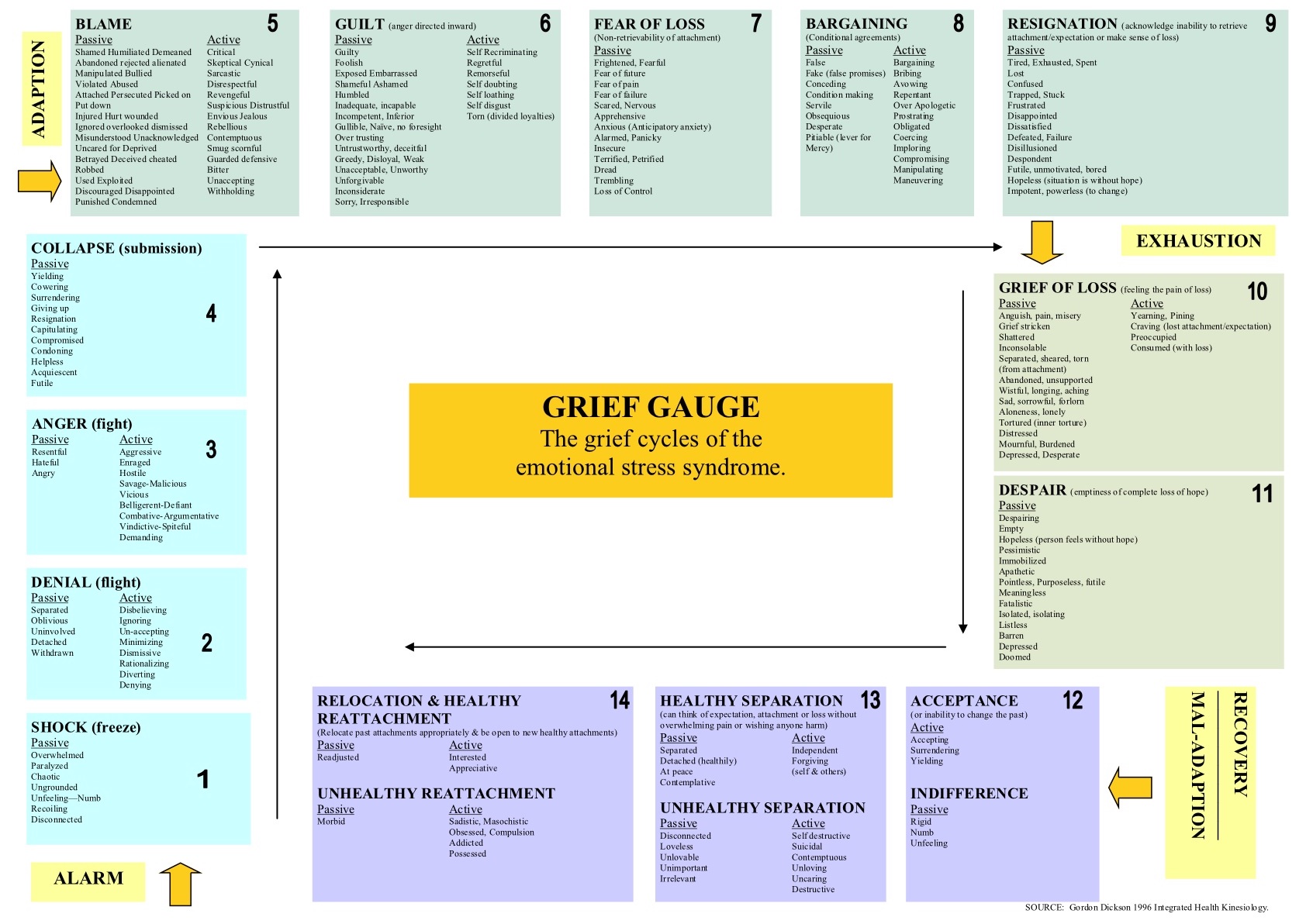
    Previously there was the belief that there stages of grieving but we are much more complex than that. Grief appears in many different ways, understanding and normalising how it appears in you is essential in developing self compassion. If unfamiliar with grief it may appear as anger, frustration, rage outbursts and addictive behaviours as we try and find ways to soothe our nervous system.


    Grief is not something we “get over” by following pre-prescribed stages, but a partner that we dance, play, honor, argue, and weep with as the cycles unfold. Its appearance and the ways it longs to be tended are unique for each psyche, heart, and nervous system.

    The timeline for this voyage is not knowable by the psychiatric community, nor by insurance panels or teachers of spirituality, but is birthed in the heavens. To rush, force, or pathologize the experience of grief is to work against nature.

    The grieving process may not have an endpoint or state of completion in which we come to some final resolution, where we “finish” and land in some untouchable place, free from our embodied vulnerability, somatic aliveness, and from falling apart and breaking open yet again.

    While some may hold this fantasied end state as a goal which comes about as we “master” life, the heart is not interested in mastery. But in entering the mystery in more subtle and sensitive ways.” Matt Lucia

    There are many ways meeting grief mindfully can support its integration and the deep wisdom that comes from honouring its place in our life. Here are a few and it is encouraged that you add your own here too.

    1. Give yourself the freedom to be emotional – however that looks like, ensuring you and others are safe
    2. Understand ways grief appears and acknowledge that is how it moves in you
    3. Give yourself space, reach out for support, and offer oneself compassion to collapse if needed.
    4. Create self care rituals – that support you, your feelings
    5. Feel it – grief truly surrendered to, moves through you in a way that a stream finds its way back to the ocean, let it have room within you so you can return to peace
    6. Own your needs – tell people what you need, reach out and ask – it helps others know what to do too.
    7. Talk about what happened with others who have experienced the same, find that support group, community so that your experience can be normalised and held fully.
    8. Remember, let the memories have room. Blocking things out doesn’t make them go away!
    9. Create a ritual that honours the end of something, whether it is a loss of property, person or environmental – rituals help us meet reality and honour that life is different now.
    10. Listen to those parts in you that are trying to get your attention and give them a voice, hold their hand and understand their needs, whilst allowing room for whatever feelings arise.
    11. Reach out to a professional – often a counsellor will have resources, help normalise grief and help the mind understand what is happening, and give room for the heart to heal. Find one that gets you!
    12. Know that the overwhelming feelings will not last forever, and that is not denying what happened, happened.


    Resources

    How to Speak to Someone About Unspeakable Grief

    Outlawed Grief

  • Frozen: Unfreeze Each Other

    Frozen: Unfreeze Each Other

    “I can only be your story about me!”

    One thing I have learned, as a therapist over 30 years, is that people change, but often our stories about them don’t. We freeze the other into a certain way of behaving, often detrimental, with our stories about them. We also freeze ourself into being a certain way in response to our idea about the other. Meaning we are both frozen in time!

    The Ojibway tribe do not noun on each other when describing people, so as to avoid freezing someone into being, but rather respect the complex nature of being as ever changing. Instead they encapsulate their experience of the person, this also applies within their juridical system. For example; instead of naming someone, they speak of how they felt, their experience, and do not add to anothers’ experience of that person.

    An Ojibway elder described not “nooning on someone” by saying:

    “Those kind of words, have a tendency to stigmatise people, to “freeze” them within a particular classification, making it more difficult for healing to occur.” Ross (1996)

    This time of the year we are confronted with our well polished, recycled stories of our family members, yet rarely take the time to enquire into the current reality, just our thinking about reality.

    • Have you ever been someones judgemental story about you?
    • What was the effect of being frozen into being something, that was not entirely you?
    • How did you react to the other?
    • How did you know that you were frozen in another persons’ story about you?

    Unfreezing the Other 

    In the same way we unfreeze ourself from shameful stories we unconsciously impose on ourself, we can free others from the outdated stories. Here’s how:

    1. Be judgemental (Most of the time we pretend not to be, so here is a chance to expose the unconscious recycled story about the other!)
    2. Write it down (Get that thinking down on paper as it is less likely to be recycled)
    3. Bring it to enquiry (Ask with your head, and answer with your heart: Is it true? Can I absolutely know this to be true about the other?) From example: “My mother is selfish, demands all the attention with no consideration for others”. Find the truth, look at reality – can you absolutely know that that is her intention, or is it your perception?

    “When we apply such labels to real people, they tend to stick. And when they stick, they cause us to start denying the complexity and wholeness of the human beings we are speaking of.” Ross (1996)

    Unfreezing Yourself

    1. How do you react when you think this thought? (This is where we start to see how entangled in our own web we are)
    2. How do you treat them when you think this thought about them? (Ok fess up, this is a co-creation remember, with the ego avoiding our part in it due to its lack humbleness).
    3. How do I treat myself when I think this thought about them? (Remember it takes two to keep the game going)
    4. Who would I be without this thought? (Are you ready to liberate yourself from being part of this story? Go on imagine who you would be, what would you do, how would you be within yourself and with the other without this frozen story?)
    5. Turn it Around (So here is the magic – where the story lets go of both of you and we live a kinder reality, meeting it as it is rather than arguing with it). Take the story:
      • “My mother is selfish, demands all the attention with no consideration for others” and turn it around to reality (opposite) “My mother is selfless, demands little attention, and considers others” Then ask yourself: Where is that truer than the previous frozen story? See if you can find 3 examples where that is truer.
      • Turn it around again: Where am I that with myself? “I am selfish, demand all the attention with no consideration for myself”. Where is that truer? Find 3 examples.
      • Turn it around again: How do I do to the other, what I accuse the other of doing to me? “I am selfish, demand all the attention with no consideration for my mum” Where is that truer? Find 3 examples.

    Remembering this is not about shaming or blaming yourself or the other, it is simply about meeting a kinder reality than your thinking.

    Now when you think of that person how do you view them now? What happened to your role you were playing in relation to your story about them? What changed?

    “In my experience thus far, it seems that traditional people see our reliance on judgemental words as a very limiting way to know the world around us, and to deal with the people in it.” Ross (1996)

    When we enquire into our thoughts that cause suffering they let go of us and we can become the more of who we really are, we live the depth of complexity.

    Give the gift of enquiry this Christmas and unfreeze each other from outdated stories!

    ________________

    References

    The Work of Byron Katie www.thework.com

    Ross, Rupert (1996) Returning to the Teachings: Exploring Aboriginal Justice, Penguin Random House, Canada

  • Who Owns the Problem?

    Who Owns the Problem?


    Who Owns the Problem?

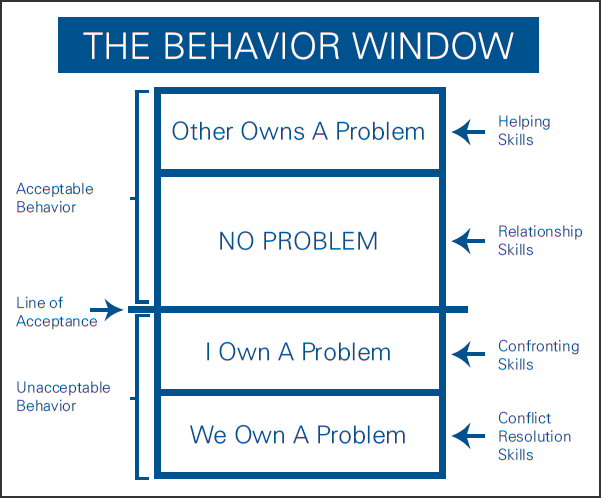
    Understanding who owns the problem is key in choosing how we address issues, concerns and conflicts arising.

    There are four basic areas of problem ownership:

    1. Other Owns a Problem
    2. No Problem Area
    3. I Own a Problem
    4. We Own a Problem

    When the Other Person “Owns” a Problem, then we can provide our skills in listening, unpacking the feelings and needs that are trying to be met, and feed them back to the person i.e. Is it that you are confused (Feeling) about your mums response? (Fact). Or Is it that you value consideration when it comes to making social arrangements?

    The No Problem Area is literal as in our needs are met and everyone is AOK.

    In the I Own a Problem Area, our own needs are not being met; we may feel stressed, overwhelmed or upset. This is where we empathetic listen ourselves to clearly define our needs and feelings and communicate them as a way of   getting them met or resolve a problem. How we do that is ask ourselves: How do I feel about the situation? What need is trying to be met? Be careful you are not getting solutions and needs mixed up too. There is never a conflict of needs, only solutions.

    When We Own a Problem, there’s a conflict in your relationship with each other i.e. We have a problem in that both peoples needs are not getting met. Here we highlight the needs of each, brainstorm solutions, collaboratively decide on a solution that works for both and then implement it, checking in at a later time frame to see if it worked.

    Our goal is to come back to the no-problem area as much as possible through using our communication skills. Firstly we have to know how an issue is for us before we can communicate it. take time to sit down and empathetically listen to yourself, discover your needs and then formulate a way to communicate this.

    Here’s an example: Lisa is concerned that every Xmas they spend it with her partners family. She wants to ensure she spends more time with her ageing mum. She is concerned that she may not have many more festive seasons together before her mum passes. Her feelings are concern, sadness, eager and excitement at the idea of spending time with her. Needs are; connection, fairness and consideration.

    Lisa brings this into an I message and communicates her concerns with her partner: “I am really eager (feeling) to spend time with mum this year at Christmas as I have a real concern that we don’t have many left to share as she ages. I really value the time (need) we have left with her. Would you be willing to consider spending Christmas with my mum this year?

    In this instance it opens up the conversation to brain storm solutions that work for both, maintain each others self esteem and confidence and ensure both parties get their needs met.

    The Awakening Group offers comprehensive online communication training for more details click here

  • Sacred Circle by Robin Truman

    Sacred Circle by Robin Truman

    Well here we are now

    We are all together

    All gathered here

    Like birds of a feather


    We sit in a circle and call it sacred

    Where we wait for the time

    To hear our names read

    Our emotions will rise

    As we answer the call

    Just knowing there’s pain

    That lives in us all.


    We know we feel disjointed

    And we all want to BELONG

    We want to feel wholesome

    That’s why we come along


    One by one, we are called to the chair

    We sit in our place, and a little aware

    That we are all very Nervous,

    And we put on an act

    Says a voice very mild

    please tell me the facts

    What ails you child?

    What sets you back?


    I speak of my parents

    And things that occurred

    Of pains that I carry

    Which are often referred

    To symptoms of ailments

    And all the other

    Which are frequent and often

    When referred to my mother

    Well,… let’s see how to help

    You could still refuse

    But let’s see where it goes

    So I’d like you to choose


    When you look out at those

    To be called on to play

    So, now go and select

    And see what they say


    I step in the circle and I walk all around

    I look at the faces that are all astound

    I take my time, for I need to know

    Are you the right one? Then if so,


    I’d like you to be my Mother,

    And you to be my Dad

    I’d like you to be my Brother

    And will you be, the Childhood

    That I never had

    As the session proceeds, more reps appear

    With looks on faces, so very sincere

    And in these figures, I see the pain

    As all this energy, flows through veins

    They take on roles, and play their part

    And the story unfolds, for me to start


    To see where it leads, where it all began

    From here right back, And well past my nan

    From her mum and from hers, It was never said

    Just what occurred, with all those long dead


    Now the therapist moves, and studies the scene

    As it seems to unfold like a trilogy

    And moves around players

    To find what beholds,

    Who is missing? what’s left untold?


    What’s happening here?

    What are you feeling?

    I see you’re disturbed

    What is it’s meaning?


    You look so intense,

    and It seems overwhelming

    You display it with tears

    I see that you’re hurting


    “I did wrong, I hurt them!”

    The player blurts out

    “I just left them all

    When I should have stood stout!”

    “I abandoned my children, I left them for dead,

    Another mans image got into my head “


    “And what happens here” the question is asked

    Of one other player representing the past

    “I’m of the same age, and I feel it too

    I’ve felt abandoned and left in the poo

    I wasn’t loved, she didn’t know how

    She just left home, not making a sound

    Now I’m a toddler, no mother around”


    I see now, why my body was aching

    It was never attended, no actions were taken

    They just buried it, inside their head

    And continued along, While They all just bled,


    From the burden they carried, Which, remained unknown

    To all those that followed, It was passed on down

    In the form of an energy, on its journey within

    Passed, undetected, Without even a whim


    So now we come forward, and it’s time to address

    All this confusion, and all of this mess

    I’ve taken on energy, from troubles carried forward

    Where deep in my soul, it’s been lodged untoward

    It seems obvious now, that it’s where we should start

    To remove all this pain, from my soul, and my heart


    So here we are mum, here we are two

    The moment of truth, I’ve carried this for you

    It’s been with me, much longer than it should

    I now hand it back, in belief that it could

    Work towards helping me, at the very minimum

    To then re- establish, all equilibrium


    Please take it now, it belongs to you!

    The release that I seek, begins to ensue

    It comes in a rush, I have no control

    I sob and I sob, and it cleanses my soul


    I bury my head, in the lap of another

    That wonderful one, representing my mother

    I’m held for a long time, and it feels so sublime

    I begin to recover this hurt heart of mine


    The session is finished, and it needs to be said

    to thank all the reps for all that they did

    thank you sincerely, I now feel rid

    of the burden I carried, that kept itself hid


    I now look to the future

    and think of the time

    when I can help nurture

    all the clients of mine

    as I engage in this work

    with a good understanding

    of the principles and tools

    for the client’s expanding


    I practice it now in my working station

    As I listen intently with plenty of patience

    For some that I see, it seems hocus pocus

    As I sit with another and use my soft focus

    I see family behind them, not wanting to part

    And I hold equal space for them in my heart


    I continue to study, to grow and expand                                                               ,

    To increase my knowledge so that I can

    Help establish for men, a men’s program.


    But I won’t stop there, I can assure you of that

    I want to help children, not leave them flat,

    To allow them to be, kids, uninhibited

    Free of the trauma and un medicated.

    The kids are the future, they should be unscarred

    To become healthy adults, and tomorrows STARS


    I need to conclude, but I want you to know

    That I want to help others, and this is so.

    With the best of intention

    I now take the time

    To thank you for listening

    To this prose of mine

    it translated itself

    It was from inspiration

    And along with myself

    became my presentation.