Category: News

  • Curiosity: The Game Changer in Relationships

    Curiosity: The Game Changer in Relationships

    The Game Changer in Relationships: Curiosity Over Justification

    There is a moment in almost every relationship conflict when the conversation reaches a fork in the road. It may begin with a forgotten phone call, an impatient tone of voice, an unanswered text message or the familiar words:

    “You never listen to me.”

    In that moment, there are two very different paths available.

    One path leads towards justification. The other leads towards curiosity.

    The difference between them can determine whether two people move into conflict drift or create connection.

    Most of us don’t consciously choose justification. It simply arises as a default as our brains are wired for war. As we read the signs, the sound of the voice, the frown, the eye roll and walking away our primitive parts of our brain engage and we go to war. Before we have even realised what is happening we start to defend ourself

    “That’s not true.”

    “I do listen.”

    “You don’t understand how stressful my day was.”

    “What about all the times I’ve been there for you?”

    Suddenly, the conversation is no longer about understanding one another or taking care of the space in the middle, that couple bubble, that connection.

    It becomes a courtroom. Each person presents evidence. Each person defends their intentions. Each person quietly hopes the jury will declare them innocent.

    Yet relationships rarely heal because someone finally proves they were right. And if you are fighting about memory ie who said what when, they you are both right and both wrong!

    We heal when someone becomes curious enough to ask,

    “Tell me more.”

    Why We Justify

    Justification is rarely selfish or uncaring. Most often, it is psychobiological.

    When we perceive we are being criticised, misunderstood or blamed, our sympathetic nervous system (fight and flight system) automatically prepares us for danger. Long before we consciously choose our response, our body has already begun responding as though we are under threat.

    Our heart beats faster. Our breathing becomes shallow. Our muscles tighten. Stress hormones such as adrenaline and noradrenaline prepare us to defend ourselves. Then the cortisol clicks in! Our reptilian brains evolve over thousands of years, a response that helped our ancestors survive physical danger, engages!

    Today, however, the greatest threats are often emotional.

    • A threat to our identity.
    • A threat to our belonging.
    • A threat to feeling loved.
    • A threat to believing we are enough.

    So when a partner says,

    “I felt hurt when you didn’t call,”

    our nervous system may hear,

    You’re failing me.”

    “You’re a terrible partner.”

    “You’re letting me down.”

    Without even realising it, we stop listening for understanding and begin listening for danger. The brain shifts from connection to protection.

    The emotional centres responsible for detecting threat become highly active, while the prefrontal cortex—the part of the brain responsible for empathy, curiosity, perspective-taking and thoughtful decision-making—becomes less available.

    We are no longer asking, “What is happening for my partner?”

    Instead, our nervous system asks, “How do I protect myself?”

    And so we justify.

    “I was busy.”

    “I told you I had meetings.”

    “You know how stressful work has been.”

    Everything we say may be true, but truth spoken from a defensive nervous system does not meet a need to be heard, understood, acknowledgement, for connection, for safety and care.

    When Two Nervous Systems Go to War

    The moment one person needs to be heard and isn’t, their nervous system becomes activated too.

    • They speak louder.
    • You defend yourself harder.
    • They become more emotional.
    • You become more certain.
    • They pursue.
    • You withdraw.

    Or perhaps both of you fight.

    The original issue quietly disappears beneath two nervous systems desperately trying to protect themselves as well as get their needs met!

    What looked like an argument about dishes, money or a phone call has become something much deeper.

    It has become two human beings asking silent questions.

    Do I matter?

    Am I safe with you?

    Do you understand me?

    Do I matter to you?

    Will you reject me?

    Will you choose me?

    Genuine intimacy requires enough safety for people to remain present with themselves and with one another, even when difficult emotions arise. When the nervous system becomes overwhelmed, curiosity naturally narrows and self-protection takes over.

    This is why telling your partner to “calm down” rarely works! Yet shifting gears to hear the need that is trying to be met does.

    An activated nervous system cannot simply be reasoned into feeling safe. Sometimes healing begins by slowing everything down.

    • Breathing.
    • Softening our voice
    • Sitting down and facing each other
    • Waving the flag of friendliness before you go offline
    • Taking a break and coming back when regulated to discuss the issues

    The Hidden Longing Beneath Every Argument

    One of the greatest shifts whether we are a couple, a parent, a daughter, sibling, colleague or employer, we can make is learning to hear what sits beneath the words. Listening for feelings and needs trying to be met.

    When someone says,

    “You never help me,”

    perhaps what they are really saying is, “I feel lonely and need support”

    “You don’t care about me.”

    may actually mean, “I want to matter to you”

    “You’re always on your phone.”

    may really be saying, “I miss connecting with you”

    Justification responds to the accusation.

    Curiosity listens for the longing, the feelings and needs.

    This is why curiosity is so powerful as it maintains connection whilst taking care of the space in the middle and not default to pro-self.

    Rather than asking, “How do I prove I’m right?” it quietly wonders,

    “What pain am I hearing underneath these words? What need is trying to be met?”

    Shifting Gears: From Defending to Listening

    Curiosity is more than asking good questions. It is learning to shift gears.

    When we become defensive, we naturally listen for mistakes in our partner’s story. We prepare our response before they have even finished speaking.

    • We interrupt.
    • We explain.
    • We defend.

    Curiosity asks us to able to hold the tension enough to temporarily put our own story aside, for a moment, and become deeply interested in the others.

    This is where active and empathetic listening become transformational.

    Active listening means being present and feeding back the feelings and facts that are trying to be expressed.

    Empathetic listening goes even deeper.

    It listens for feelings and unmet needs embedded in the longing beneath the behaviour and words.

    Instead of responding with defensiveness when you hear:

    “You never listen,”

    we begin by responding by saying

    “It sounds like you are eager to be heard around this?”

    Or

    “Is it that you are anxious as you would really like to connect?”

    Notice that none of these statements require agreement and there is no “I” as you have left the message with the other.

    It is simply communicating to gain understanding first.

    It is only after we have gained understanding of the other and we are on the right track not consumed by assumptions, do we gently offer our own experience in the form of feelings and needs.

    “Thank you for sharing that. Would you be willing to hear my experience about the situation?”

    This is one of the beautiful paradoxes of relationships.

    The fastest way to be understood is often to help the other person feel understood first.

    Your feelings matter equally. But two activated nervous systems cannot truly listen at the same time. Someone has to shift gears first.

    Curiosity Is Not Surrender

    Many people worry that curiosity means admitting they were wrong.

    It doesn’t.

    Curiosity is not agreement.

    It is not accepting blame for something you didn’t do.

    It is not tolerating abuse.

    Curiosity simply says,

    “Your experience matters enough for me to understand it before asking you to understand mine.”

    There is enormous strength in that. Because when people feel emotionally safe, they naturally become more curious about us in return.

    From Winning to Repair

    Healthy relationships are not built because we avoid conflict. They are built because we learn to repair after conflict., and quickly.

    Repair begins when we recognise that intention and impact are often different. You may never have intended to hurt someone. Yet they may still have experienced hurt.

    One simple sentence can change the entire direction of a conversation.

    “It looks like that really upset you?”

    That is not admitting malicious intent. It is acknowledging another person’s reality. And sometimes that is all the nervous system needs to begin relaxing.

    Protecting the Relationship Instead of Protecting Yourself

    The next time conflict begins, notice the moment you feel the urge to defend yourself.

    Pause. Get curious!

    Take one slow breath.

    Notice your body.

    Then ask yourself one question.

    “Am I trying to protect my position, or am I trying to protect this relationship?”

    Transformation does not emerge through pressure or persuasion, it emerges with tiny habits and grows from presence and emotional safety. It grows when curiosity becomes stronger than justification.

    Because perhaps the greatest act of love is not having the perfect answer. It is having the courage to remain curious.

    To listen before explaining.

    To understand before correcting.

    To reflect before reacting.

    To protect the relationship before protecting your ego.

    So before saying,

    “But…”

    pause. Ask,

    “Help me understand what is going on for you.”

    Listen for the feelings.

    Listen for the needs.

    Listen for the longing beneath the words and behaviour.

    Then, once the other knows they have been heard, gently share your own heart.

    Because love is rarely strengthened by proving who was right. It is strengthened when two people feel safe enough to stop defending themselves and begin discovering one another again.

    That is the quiet power of curiosity.

    And sometimes, it is the doorway that leads two people home to each other, to security, mutuality and respect.

  • Addiction, Dependence and Hyperbolic Tapering

    Addiction, Dependence and Hyperbolic Tapering

    by Julie Santall

    Judy’s Story

    Judy walked into my room clinging tightly to the arm of her partner. A tall, elegant woman of 69, she appeared frightened, vague and uncertain. She sat down without letting go of him. I noticed immediately her dependence on him and his apparent impatience with that dependence. Each time he shifted away, she reached for him again. Judy had brought him for support, but it quickly became clear that his presence was not helping her feel safe.

    Judy had been referred to me by a local wellness clinic. More than ten years earlier, she had been prescribed Cymbalta (duloxetine), a serotonin-norepinephrine reuptake inhibitor (SNRI), by her psychiatrist.

    SNRIs are based on the “monoamine hypothesis” of depression. They work by blocking the serotonin transporter (SERT) and norepinephrine transporter (NET), theoretically increasing signalling in parts of the brain involved in mood, attention and pain regulation. However, despite decades of use, the precise mechanisms of antidepressants and antipsychotics remain poorly understood.

    Judy had originally been prescribed 30 mg of Cymbalta. Several years earlier she had attempted to discontinue the medication and had successfully reduced to 5 mg. However, she dropped from 5 mg to zero too quickly and experienced severe withdrawal symptoms. Feeling “awful,” she returned to her doctor, who reinstated Cymbalta at 60 mg before later reducing it to 30 mg and adding Lexapro (escitalopram), an SSRI, to “assist” the withdrawal process.

    Her pharmacist raised concerns about serotonin syndrome, which caused Judy considerable anxiety. Serotonin syndrome is a potentially serious reaction caused by excessive serotonin activity, usually when multiple serotonergic medications are combined. Ironically, while stopping psychiatric medication too abruptly can be dangerous, adding medications can also create complications.

    This uncertainty led Judy to compulsively research her symptoms online using ChatGPT and other sources, which only intensified her fear.

    What Judy was actually experiencing was a combination of rapid withdrawal from psychotropic medication, multiple interacting prescriptions, escalating anxiety, poor sleep and eventually akathisia.

    Akathisia is a movement disorder characterised by an intense inner restlessness and an overwhelming urge to move. Although not life-threatening, it can be profoundly distressing and may contribute to agitation, despair and suicidal thinking.


    Neuroadaptation and Withdrawal

    Over the years Judy’s brain had adapted to the medications she was taking. This process, known as neuroadaptation, involves changes in receptor sensitivity and neurotransmitter regulation. When medications are withdrawn too quickly, the nervous system can become destabilised.

    Judy had experienced this before. In her twenties, after treatment for anorexia, she had abruptly stopped antidepressants and experienced withdrawal symptoms. Years later, when she attempted to stop Cymbalta rapidly under medical guidance, she again experienced severe withdrawal.

    Unfortunately, as often happens, her psychiatrist interpreted the withdrawal symptoms as a relapse of depression or anxiety and reinstated the medication at a higher dose.

    Withdrawal vs Relapse

    Distinguishing withdrawal from relapse is critical.

    Withdrawal symptoms typically begin within days of reducing or stopping medication. They may include:

    • dizziness
    • nausea
    • insomnia
    • “brain zaps” or electric shock sensations
    • anxiety and agitation
    • akathisia
    • intrusive or violent thoughts

    Withdrawal symptoms often improve if the medication is reinstated to the last stable dose.

    Relapse, on the other hand, usually develops gradually over weeks or months and mirrors the original emotional presentation prior to medication. It does not reliably improve with rapid dose increases.

    Repeated cycles of withdrawal and reinstatement can also contribute to what is known as kindling.

    Kindling

    Kindling refers to a phenomenon in which repeated cycles of substance use and withdrawal sensitise the nervous system, causing each withdrawal episode to become more severe.

    Historically associated with alcohol and benzodiazepines, kindling is now increasingly recognised in psychotropic drug withdrawal. Over time the nervous system becomes more reactive, increasing sensitivity to future reductions and making withdrawal progressively harder to tolerate.


    Polypharmacy and Nervous System Overload

    By the time Judy came to see me, she was experiencing severe anxiety, cognitive impairment and insomnia.

    Her psychiatrist had prescribed propranolol, a beta blocker often used to reduce physical symptoms of anxiety. When Judy reported ongoing insomnia, she was then prescribed olanzapine, an antipsychotic medication commonly used for sedation at low doses.

    The olanzapine caused significant morning sedation, so dexamphetamine was added to counteract the grogginess.

    At this point, multiple medications with opposing effects were interacting in her system simultaneously:

    • Cymbalta
    • Lexapro
    • propranolol
    • olanzapine
    • dexamphetamine

    The result was increasing agitation, anxiety and nervous system dysregulation.

    If I were to fully explain the pharmacological interactions between these drugs, it would require another article entirely. Suffice to say, it was clear why Judy’s nervous system was in such distress.


    Judy’s History

    Judy explained that in 2008 she had been working as a social worker in an adolescent mental health unit while raising four adopted children on her own, one of whom was autistic and required intensive care.

    She had never married. Work became a way of escaping the overwhelming responsibilities at home.

    She also described a childhood in which she had acted as her mother’s confidant and emotional support. Between the ages of 16 and her early twenties she had struggled with anorexia and had previously been prescribed antidepressants.

    To manage the overwhelm in adulthood, Judy increasingly relied on red wine. Eventually she entered a detox program, where she met the psychiatrist who first prescribed Cymbalta.

    Even before our work together began, Judy had already experienced one failed taper. Following standard pharmaceutical guidelines suggesting that withdrawal effects are mild and self-limiting, her psychiatrist reduced her rapidly from 60 mg to 30 mg.

    This history was significant because it suggested a sensitised or “kindled” nervous system. I knew she would likely require a very gradual taper to minimise further harm.


    Dependence vs Addiction

    The terms dependence and addiction are often used interchangeably, but they describe different phenomena.

    Dependence

    Dependence is primarily physiological. The body adapts to the presence of a substance and begins to rely on it to function normally.

    Characteristics of dependence include:

    • tolerance
    • withdrawal symptoms when stopping
    • neuroadaptation within the nervous system

    A person can be dependent without being addicted. For example, someone prescribed opioid medication for severe pain may develop physical dependence without compulsive misuse.

    Addiction

    Addiction is behavioural and psychological. It involves compulsive use despite harmful consequences.

    Characteristics of addiction include:

    • loss of control
    • compulsive cravings
    • continued use despite harm
    • psychological reliance to manage emotional pain

    From an Internal Family Systems (IFS) perspective, addictive behaviours can be understood as protective “firefighter” parts attempting to numb distress or emotional overwhelm.

    In Judy’s case, her primary issue was dependence rather than addiction. Her brain had adapted to long-term exposure to psychotropic medication.


    The Brain’s Adaptation to Medication

    With antidepressants and antipsychotics, the brain adapts to the constant presence of the drug.

    The widely promoted “chemical imbalance” theory of depression has been increasingly challenged in recent years. Critics argue that the theory was oversimplified and heavily marketed by pharmaceutical companies.

    The brain continually strives for homeostasis. In response to ongoing medication exposure, receptor sensitivity changes and neurotransmitter systems recalibrate.

    Over time the nervous system becomes dependent on the presence of the medication.

    This is why reducing psychiatric medication can become so difficult.


    Hyperbolic Tapering

    Judy wanted to discontinue her medication safely. Given her history, I believed she would need to taper hyperbolically.

    Hyperbolic tapering involves making progressively smaller reductions as the dose becomes lower.

    Rather than reducing linearly — for example by dropping 10 mg each time — reductions become increasingly gradual near the end of the taper.

    For example:

    • 40 mg → 20 mg
    • 20 mg → 10 mg
    • 10 mg → 5 mg
    • 5 mg → 2.5 mg

    Another common approach is reducing by approximately 10% of the previous dose and holding for periods of stabilisation between reductions.

    Why Hyperbolic Tapering Matters

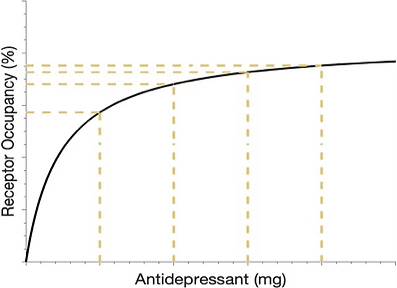
    Research using receptor occupancy studies suggests that even low doses of antidepressants can occupy a very high percentage of brain receptors.

    This means that small reductions at lower doses may have disproportionately large effects on the nervous system.

    In practice, this is why dropping from 5 mg to zero can feel far more destabilising than reducing from 40 mg to 35 mg.

    Psychiatrists and researchers such as Mark Horowitz and David Taylor discuss this extensively in The Maudsley Deprescribing Guidelines (2024). Anders Sørensen also explores these principles in Crossing Zero (2025).


    The Emotional Dimension

    Judy had spent much of her life moving away from painful emotions through work, wine and eventually medication.

    This is profoundly human. Most of us seek relief from emotional pain.

    However, tapering medication often means that long-suppressed emotions begin to surface again.

    The therapeutic task is not simply medication reduction. It is helping the client build the capacity to tolerate and understand difficult emotional and bodily experiences.

    Antidepressants can dampen emotional intensity, but they do not resolve the underlying life experiences, attachment wounds or unresolved trauma contributing to suffering.

    Judy had never truly stopped to examine:

    • why she adopted four children while still very young and living at home
    • why she developed anorexia at sixteen
    • why she relied so heavily on work and caretaking
    • why she felt unable to tolerate stillness or emotional discomfort

    Eventually, her attempts to numb overwhelm resulted in dependence on a complex medication regimen that caused significant iatrogenic harm.


    A Kindled Nervous System

    Judy’s tapering journey has been difficult.

    Despite collaborative planning with her integrative doctor and myself, she struggled to follow the tapering schedule consistently. Feeling temporarily stable after an initial reduction, she reduced again too quickly.

    Her nervous system reacted intensely.

    Once a nervous system becomes highly sensitised or kindled, even minor changes — including supplements or seemingly benign medications — can trigger significant symptoms.

    At that point, there is often no medication that can simply “fix” the problem. The work becomes learning how to gradually tolerate and regulate bodily sensations rather than constantly escaping them.

    Judy also developed cognitive difficulties after multiple medication changes and additions.

    Compounding matters further, her partner responded with frustration and criticism rather than emotional safety. From an attachment perspective, this lack of safety likely amplified her nervous system distress.

    When overwhelmed, Judy repeatedly sought reassurance from her psychiatrist, whose primary response was further medication changes.

    As the saying goes: when your only tool is a hammer, every problem begins to look like a nail.


    The Role of Counselling

    My primary focus with clients withdrawing from substances or psychotropic medications is resourcing.

    In practical terms, this means helping them find even brief moments of safety, steadiness or calm within the body and mind.

    Only when the nervous system has some degree of stability can deeper therapeutic work occur.

    The goal is not merely to remove medication, but to help clients understand themselves more deeply rather than relying solely on substances or compulsive behaviours to manage distress.

    Judy’s story is ongoing.

    I hold hope for her because I have seen many people successfully taper from psychiatric medication when the process is gradual, collaborative and carefully supported.

    I am one of them.

    Her story highlights both the potential dangers of rapid psychotropic withdrawal and the importance of compassionate, informed care.

    While her experience is extreme, it is not hopeless.

    Every tapering journey is individual. With appropriate pacing, support and nervous system regulation, many people can successfully reduce or discontinue psychiatric medication.


    References

    Horowitz, M., & Taylor, D. (2024). The Maudsley Deprescribing Guidelines. Wiley Blackwell.

    O’Brien, C. P., Volkow, N., & Li, T.-K. (2006). What’s in a word? Addiction versus dependence in DSM-V. American Journal of Psychiatry, 163(5), 764–765.

    Sørensen, A. (2025). Crossing Zero. North and Vale.

    In his book ‘Crossing Zero’ (2025), Anders Sorenson explains the receptor occupancy/dose relationship. For example, at only 20mg of Prozac – 86% of the brain’s receptors are occupied with serotonin from the drug. This means that the smaller the dose the greater the impact it has on the brain. Mark Horowitz and David Taylor also describe this in their comprehensive book ‘The Maudsley Deprescribing Guidelines’ (2024)

    Whitaker, R. (2010). Anatomy of an Epidemic. Crown Publishing Group.

    In his book “Anatomy of an Epidemic” (2010) Robert Whitaker summarises a World Health Organisation study (1998) showing that people diagnosed and treated with psychiatric medication for depression had worse outcomes than those not exposed to drugs. 

    Mark Horowitz interview on withdrawal, relapse and hyperbolic tapering:

    In this interview Mark Horowitz discusses the difference between withdrawal and relapse, the effects of long-term antidepressant use and the role of clinicians and peer support in de prescribing and hyperbolic tapering. 

    Further Reading

    Farmer, Adele ‘What I have learnt from helping thousands of people taper off antidepressants and other psychotropic medications’ https://pmc.ncbi.nlm.nih.gov/articles/PMC7970174

  • What is Held In and What is Held Out?

    What is Held In and What is Held Out?

    Many years ago, whilst immersed in a silent retreat, in the bathroom of all places, I asked a question as my partner at the time walked past. The answer resulted in everything disappearing, and I experienced that we are consciousness itself. I saw how lifetimes don’t exist, there is no time and no space it is simply all now, I saw how we are never born and never die — only the body does. I have never been the same since.

    The question was: How can I experience nothing when my enlightened teacher walks past, and nothing when my partner walks past?

    My whole being replied, “Because you are nothing.”

    I laughed so deeply and with pure joy that everything disappeared.

    As a therapist, and for many gurus, how do you invite someone — including yourself when the ego takes over again — to that place of consciousness itself? Simple, sublime; there is nothing and everything at the same time. We can point to it, yet the moment the mind tries to grasp it, we are back in the mind.

    How do we navigate feelings, thoughts, and pain bodies enough to quieten them so we can experience what never leaves us, what the mind continually overlooks in its searching?

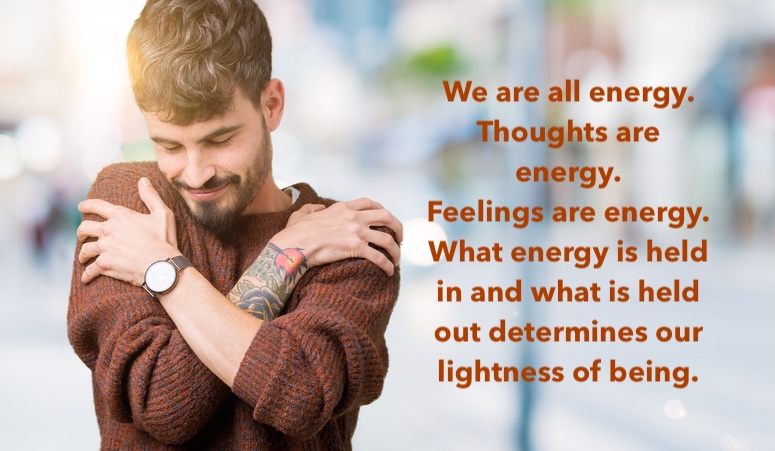
    I have discovered a technique that honours the premise that we are simply energy vibrating at a certain frequency. Scientists understand this in terms of viruses. Each virus vibrates at a certain frequency. Thoughts vibrate at a certain frequency, and we can observe their effect on water. Feelings vibrate at a certain frequency, and we experience their effects within our bodies.

    They are like radio waves moving through us, but sometimes they get stuck and we begin vibrating at that frequency. This can be distressing because it is not the vibration of who we truly are. We call this suffering.

    This is what we hold in.

    Which also raises the question:

    What do you hold out?

    What delicious feelings, experiences, and sensations do you hold out?

    If radio waves come and go, then the good stuff moves through you too.

    Joel Young created a very quick technique called ‘Non-personal awareness’ that the mind will likely dismiss because of its simplicity. Yet it is a powerful process that meets the frequency of the thought, feeling, or pain body and disengages it from our being — in other words, sending it back where it came from, letting it move through you easefully.

    Want to know how?

    It is simple.

    It involves six sentences.

    Yep. Simple and elegant.

    Here’s how

    1. Firstly, grab a pen and paper, or journal or your phone so you can record your own dialogue.
    2. Secondly, think of something that challenges you, constricts you, that you hold in. Just vomit it onto the page, or by speaking into your phone on record, and see what words, feelings, behaviours, thoughts, sounds, movements appear that are paramount, repeated. What is the fundamental thing. It does not have to make sense. You do not have to analyse it or figure it out, it is just energy stuck.
    3. Take one of these which may have sounds and movements with it , without analysing it or trying to understand it or find parallels with your childhood, no interpretation needed, simply bring it into these sentences. For example, I may have deep feeling that people don’t care about me and a hand movement, and a sigh that goes with it.
      • Simply say (whilst adding the sigh and hand movement)
        • This people don’t care about me
        • This energy people don’t care about me
        • This pure energy people don’t care about me’
        • ‘This pure energy people don’t care about me is not personal’ (3 times)
        • This pure energy people don’t care about me is not personal’
        • This pure energy people don’t care about me is not personal’
        • This pure energy people don’t care about me is not personal and I am willing to experience it’
    4. Allow space for the sensations to arise, you can go as slow as you like. You may say the last sentence again.
    5. Wait until you feel the clarity appear again and maybe a natural aliveness arises.
    6. Now if energy is held in and it flows out, what is held out? What energy would you like to replace the energy that was held in that has now gone with? Maybe joy, ease, love, peace…find yours. Sometimes it arises naturally after the first part of the exercise. For example: ‘Connection’ arose after the first part of the exercise.
    7. Take this feeling, sensation, whatever it is and bring it into the same sentences:
      • Simply say (adding your feeling in)
        • ‘This connection’
        • ‘This energy of connection’
        • ‘This pure energy of connection’
        • ‘This pure energy of connection is not personal’ (3 times)
        • This pure energy of connection is not personal and I am willing to experience it’

    Simply notice what happens.

    There is no need for analysing, interpretation, or fixing.

    Simply experience the energy moving through you.

    Some people have trauma leave their body, which can be overwhelming, I would simply allow the body to shake, cry and not to fear the movement of the energy. Simply repeat the sentences slowly.

    30 Day Challenge

    In this time in history, we are continually bombarded by radio waves — information, thoughts, pain bodies, feelings, and countless electronic frequencies that can interfere with our connection to our own true vibrational frequency.

    Perhaps this is an opportunity.

    An opportunity to allow these energies to move out and to let who you truly are move in.

    So here is the challenge.

    For 30 days, use your phone, journal, or a piece of paper and spend just a few minutes each day with this process.

    Notice what you are holding in.

    Everyday bring something that you hold in to the challenge by using the non-personal awareness exercise. Remember to invite yourself to experience what you hold out too after you have completed the first round, or a few rounds of what energy you hold in.

    You may discover that the thoughts, feelings, stories, and sensations that once seemed so personal are simply energy moving through awareness.

    Perhaps beneath the noise, beneath the stories, beneath the endless radio waves moving through the mind and body, there is a natural clarity, aliveness, peace, love, connection, or joy waiting to be experienced.

    Not because you created it.

    Not because you earned it.

    But because it is already here.

    The challenge is simple.

    Thirty days.

    A few minutes a day.

    Six sentences.

    And a willingness to experience what arises.

    See what happens.

    Let’s share the energy and add your comments below

  • Moving In Tune with Your Ancestors

    Moving In Tune with Your Ancestors

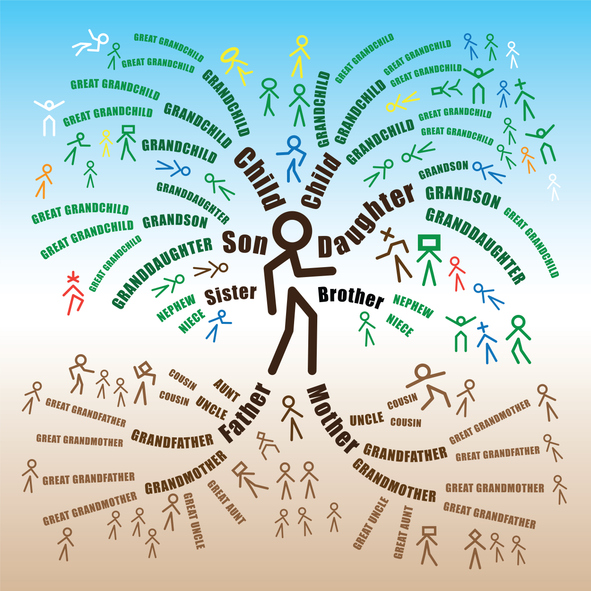
    The idea that we are all connected becomes especially clear when we look at families and communities as living systems rather than just collections of individuals. Within a family, each person’s experiences, beliefs, and emotional patterns ripple outward, subtly shaping the behaviour and wellbeing of others—sometimes across generations. A parent’s unresolved stress can influence a child’s sense of safety; a grandparent’s migration story can shape values around survival, sacrifice, or belonging.

    These dynamics don’t exist in isolation, because families themselves are embedded within larger systems like culture, economy, and community networks. Communities, in turn, reinforce or challenge family patterns through shared norms, support structures, and collective experiences. When these systems are healthy and responsive, they can strengthen individuals by providing connection, identity, and resilience. When they are strained or fractured, they can perpetuate cycles of disadvantage or disconnection. In this way, individuals are both shaped by and contributors to the systems they belong to, constantly influencing and being influenced in an ongoing exchange.

    In this way, individuals are both shaped by and contributors to the systems they belong to, constantly influencing and being influenced in an ongoing exchange—and this interconnectedness extends beyond human systems to include the natural environment, where our wellbeing is intimately tied to the health of the ecosystems we depend on, from the air we breathe to the land and resources that sustain life.

    Family Constellations is a therapeutic approach that explores how hidden family dynamics, loyalties, and unresolved traumas shape our present-day behaviours, emotions, and relationships. Developed by Bert Hellinger, this method works on the premise that individuals are deeply connected to their family system across generations, often unconsciously carrying burdens that do not originate with them.

    In my article “I Will Do It for You, Even If It Costs Me,” I highlight one of the central themes in Family Constellations work: the unconscious loyalty that leads individuals to take on pain, hardship, or limitation on behalf of others in their family system. This phenomenon often manifests as a silent inner contract—an inherited belief that says, “If you suffered, I will suffer too,” or “I will carry this so you don’t have to.” While rooted in love and belonging, these patterns can become deeply limiting.

    The article illustrates how such loyalties may show up in everyday life. A person might struggle financially despite having opportunities, remain stuck in unhealthy relationships, or experience persistent feelings of guilt or anxiety without clear cause. Through the lens of Family Constellations, these struggles are not random; they may be expressions of unresolved family entanglements, where one family member unconsciously “represents” another’s fate.

    A key insight from the article is the idea that love, in these cases, becomes distorted. Instead of supporting growth and vitality, it binds individuals to past suffering. Family Constellations seeks to gently uncover these dynamics, often through experiential exercises where participants represent family members and reveal hidden connections. This process allows individuals to see their situation from a broader systemic perspective.

    Healing in this context does not come from rejecting one’s family, but from acknowledging what belongs to whom. Family Constellations emphasises that true resolution arises when individuals can honour their family members’ experiences without taking them on as their own. By doing so, they restore a natural order within the system—where each person carries their own fate, and love can flow more freely.

    Ultimately, I Will Do It for You, Even If It Costs Me”sheds light on the powerful, often invisible forces of familial love and loyalty. It reminds us that while these bonds are essential to our sense of belonging, they can also limit us when expressed unconsciously. Family Constellations offers a pathway to transform these inherited patterns, enabling individuals to live more fully in their own lives rather than in service of unresolved pasts.

    SHORT VISUALISATION EXERCISE

    Find a quiet place where you can sit comfortably and bring your attention inward. Gently acknowledge that you are not alone, even in this moment—you are connected to a wider system that stands behind you. In your mind’s eye, imagine your family system: your parents behind you, and behind them their parents, extending back through generations. There is no need to know their stories in detail—simply sense their presence. Notice that life has flowed through each of them to reach you. Take a moment to internally say, “I honour your lives, your struggles, and your gifts. What belongs to you, I leave with you. What has been given in love, I receive with gratitude.”

    Now, expand your awareness to include the communities that have shaped you—friends, teachers, cultures, and places that have supported your growth. Acknowledge their influence and silently thank them for what they have contributed. Allow yourself to feel supported, as if you are standing within a field of connection rather than on your own.

    Finally, bring in the natural world around you. Imagine the ground beneath your feet, steady and holding you, the air filling your lungs, and the wider living environment that sustains your body and energy each day. Sense that you are part of this larger web of life, not separate from it. As you breathe, allow a feeling of alignment to settle in your body—supported from behind, connected around you, and grounded below. From this place, gently return to your day, carrying a quiet sense of strength, belonging, and clarity.

  • Reclaiming Eros

    Reclaiming Eros

    In a culture that favours and celebrates couples, how do we celebrate Valentines Day amongst a generation who are pair bonding less, how do we celebrate passion, romance, aliveness, attraction and fundamentally love?

    In a generation full of such uncertainty we can feed the fear or we can cultivate love and community. Therefore on Valentines Day let’s reclaim eros!

    Eros, in Greek mythology, is the god of desire, erotic love, attraction and the primal force that draws use together either romantically or cosmically. Eros is the longing that drives humans toward beauty, creativity, and even spiritual transcendence.

    Essentially Eros, is the quality of aliveness, vitality, and mystery that keeps us curious. In essence, Eros is the force of attraction itself—the spark that initiates connection, passion, and the creation of new life.

    Esther Perel highlights that eros is not simply about sexual desire or sex but is the dynamic energy that emerges when we can experience both connection and individuality at the same time.

    According to Perel it is:

    • The expression of our life energy. It is what makes us feel vibrant, creative, and turned on by life itself—not just by a partner.
    • Rooted in mystery and separateness. She often explains that while love seeks closeness and security, desire requires distance. Eros thrives in the space between two autonomous individuals.
    • Sustained by novelty and imagination. Predictability and routine can dull erotic energy; curiosity and surprise reignite it.
    • About wanting, not just having. Eros lives in anticipation, longing, and the tension between self and other.

    Reclaiming Eros in Personal Life

    How do we cultivate eros in our lives again?

    To reclaim eros is to reclaim our own sense of vitality. It means becoming a person who is engaged, passionate, curious, and sensually awake to life. To open to life as though it was your lover. To move, breathe and appreciate life in such a way that the mundane comes alive in the most subtle moments.

    I remember years ago I lawn mowed love hearts into the lawn, I painted a love story with my naked body on canvas, scattered rose petals, lit candles, cooked an aphrodisiac dish inspired by Isabel Allende’s book; ‘Aphrodite’…and so much more.

    How you cultivate eros in your daily life is unique, through art, dance, food, meditation, nature-based activities, self-pleasuring, taking yourself out on a date, or celebrating with friends, however it is, it is your way. Here are some ideas for daily practices that may help celebrate eros beyond the bedroom:

    1. Create Micro-Mysteries
    Resist over-sharing every thought and schedule. Allow space for individuality. Take a solo class. Change your routine. Let your partner (or the world) rediscover you.

    2. Cultivate Self-Expansion
    Desire is fuelled by growth. Try something that makes you slightly nervous—a dance class, public speaking, creative writing. When we feel alive in our own skin, we become magnetic.

    3. Practice Sensory Awareness
    Eros lives in the senses. Slow down while drinking your coffee. Notice textures, scents, music. Wear clothes that feel good on your body, not just practical.

    4. Invite Playfulness
    Flirt. Tease. Laugh. Play disrupts routine and invites spontaneity, which is essential for erotic energy. Be curious about others in public.

    5. Protect Time for Beauty
    Art, music, nature—these experiences awaken longing and inspiration. Beauty stirs eros because it reminds us that life is more than function.

    6. Maintain Healthy Distance
    Spend intentional time apart. As Perel suggests, “Fire needs air.” When we step away from constant proximity, we make room for anticipation.

    Eros as Personal Responsibility

    Reclaiming eros is not about demanding more excitement from others. It is about becoming someone who is engaged with life. When we nurture our own passions, creativity, and mystery, we invite desire back into our relationships naturally, starting with the relationship with yourself.

    Eros is less about what we do in private moments and more about how we inhabit our daily lives. It is the courage to remain curious. The willingness to open to life in new ways, celebrate the you are love and you have the freedom to pursue what makes us feel vibrantly alive.

    In a culture that prizes efficiency and productivity, choosing eros is almost radical. It asks us to slow down, to savour, to risk a little uncertainty.

    And perhaps that is the real invitation: not to chase the spark, but to become it!

    Honouring Eros!

    __________________________________________________________________

    Bibliography

    Perel, E. (2006). Mating in captivity: Unlocking erotic intelligence. HarperCollins.

  • Dealing with Change Effectively

    Dealing with Change Effectively

    As we watch the world rapidly changing I have been contemplating a question, one that I have been researching for about 40 years as a therapist. The question is:“How do we optimise the brain and body to deal with constant change and challenges effectively?”
    As a teacher in holistic counselling I draw on many modalities from:

    Yet the one thing that protects us from our nervous systems going into overdrive and overwhelm and discombobulation is relationships, secure functioning relationships. We look after these relationships so they look after us. 
    Secure functioning relationships can be co-created, we do not have to be secure to co-create a secure environment with others, just committed to make it happen, know the ingredients, and the steps and then follow the rules, including repair and fighting fair.
    So what are the ingredients to create secure functioning relationships:

    1. A Shared vision and purpose – Why are you together? What can you do with each other, you can’t with anyone else (For intimate partners)
    2. What are the rules of engagement? (the governing principles) We expect each other to know the rules 
    3. Fighting fair rules as well as how to repair – repairing quickly means things do not go into long term memory
    4. Understand Attachment styles our attachment styles affect our ability to move toward someone or away with ease or difficulty
    5. Launchings and Landings – here is where rituals take care of the relationship and each other. How do you connect in the mornings and the evenings, what are the little rituals you do together? Putting each other to bed at night? Date nights, coffee with friends? What’s your rituals? Meditate together? Walks and talks? 
    6. Welcome Home Hugs – the moment you arrive seek each other out and give each other a hug, don’t let go until each other is completely relaxed! We are wired to regulate each other! 
    7. Effective Communication – understand how to talk so you are heard as well as the other is heard. Understand the every behaviour has a need trying to be met, so communicating from needs is essential.

    This framework is NOT confined to couples! Parents, friends, family members, co-workers can all create secure functioning relationships, which right now are much needed. 

    Why this works


    Secure functioning relationships create buffers and help us by providing:

    • Co-regulation first preventing threat responses, conflict and prolonged fights,
    • Shared vision means that we value what we have and will protect it from outside forces
    • Rules + repair keep stress out of long-term memory
    • Needs-based language reduces defensiveness
    • Rituals create predictability in a changing world


    Exercise to Try At Home

    1. Welcome Home Hug – If in doubt hug it out – but hold onto each other until both are relaxed
    2. Spot the different attachment styles of your friends, partner, co-workers and family members and respond accordingly – if someone is avoidant-anxious – try giving them an escape route if you are wanting to connect by saying:
      • I know you are busy, but when you are ready I would love to…….(fill in the gap)” Or “I don’t want to stop you from what you are doing, when you are ready, could we….(fill in the gap)”. Avoidants get swamped easily, so we need to give them an escape route so they can come to us.
      • With an ambivalent- anxious, they are external regulators so go towards them with loving words when they criticise on returning from being away. For example: “I am not going anywhere today, and I would really like to hang out with you.” “When I come home let’s sit down and have dinner together” or “I really enjoy hanging out with you, as our friendship means a lot to me.”
    3. Be aware of the towards and away dynamics as conflicts arise when we move away from each other, in the case of ambivalent anxious, they need reassurance that you will return, and avoidants who need to know that you will not swamp them, and there is an escape route when coming towards them! Practice allowing space (if ambivalent-anxious) or go towards the others more often, if avoidant.
    4. How can you offer safety in all your interactions? What is possible when we truly feel safe?

    Here’s to creating a more secure functioning world, one couple, one friend, one family member, at a time!

  • Hold Onto Your Kids

    Hold Onto Your Kids

    Moving from Peer Orientation to Parent Orientation

    As a therapist of four decades there is one issue that baffled me until recently and that is the increased rage in a number of teenagers and parents unable to have any influence on them. Parents were beside themselves and I, as a therapist, felt like I lacked insight as to what was going on, until recently.

    I have been reading a book by Gabor Mate and Gordon Neufeld called ‘Hold on to your Kids: Why Parents Need to Matter More than Peers’. As a mother of a 25 year old son I have experienced many of the challenges, at times as a single parent, that come with children navigating life, friends, drugs, technology, identity, step families, parental separation and so much more. No parent comes with a manual yet it feels as though we have lost trust in our intuition as a parent.

    Children’s attachment needs are trying to be satisfied by their peers who seriously fall short of many layers of attachment requirements to develop into mature adults. Children in our culture today, are moving from parent orientation to peer orientation whereby belonging to a peer groups is conditional on conforming to the group norms (proximity), dress code (sameness), and adhering to particular behaviours (belonging and loyalty). Peers are not warm, or loving in a way a parent is and are unable to offer guidance from experience of having lived that themselves, cannot offer significance, and a feeling as though they matter, love and emotional closeness and being known (psychological closeness). Therefore attachment to peers only satisfies basic attachment needs of a child and that is proximity, sameness and belonging.

    Similarly parents are not as supported by their community as much these days, to then be able to support their children. Couples are easily able to separate rather than guided to make it work. I l know this all sounds very conservative, and it is not aimed to be, there is alot of room for diversity here, it is just that when we lose connection with community as parents we become under resourced, stressed, overwhelmed, lonely and doubt ourselves, which means that we are not as available to helping children navigate the world as they grow up because we are trying to survive. These are the developmental, emotional, behavioural, social, and academic consequences Neufeld identifies when children attach to peers instead of parents.

    Six Levels of Attachment


    Gordon Neufeld describes six levels of progressive depths of attachment, that is how children connect to caregivers and eventually to others. Healthy development involves moving through these levels with safe adults before forming peer relationships. Attachment is through:


    1. Senses (Proximity)

    The child wants physical closeness, eye contact, being held and hearing your voice. This shows up as Wanting to be near you, reaching out for you, bids of connection, touching, leaning, cuddling, watching your face constantly (See Beatrice Beebe’s work) This is the most basic form of attachment—connection through the senses. 


    2. Sameness

    The child wants to be liked. This shows up as copying your words or gestures, anting matching clothes, mimicking your preferences and imitating your routines. You are the model of behaviour the child copies. Sameness helps the child feel secure and connected by aligning with your identity.


    3. Belonging & Loyalty

    To belong to the same “team”, and belong to your team as a parent. This shows up as possessiveness (“This is my mommy/daddy”) wanting to be included in family decisions, claims of loyalty and feeling upset when you favour others. This level cements you as “their person.”


    4. Significance

    To matter deeply to you. How it shows is seeking your approval, wanting to be your helper, asking “Did I do good?” and acting special or trying to impress you. The child wants to feel that you value and treasure them.


    5. Love (Emotional Closeness)

    Expressing love freely, giving homemade gifts, emotional sharing (“I’m scared,” “I’m sad”), seeking comfort, feeling safe and being able to be vulnerable. This is deeper than significance—the child gives their heart.


    6. Being Known (Psychological Closeness)

    This need is to be fully seen and understood. This shows up as confiding secrets sharing hopes, fears, and true thoughts, trusting you with their inner world, wanting to “be known” without social masks. This is the deepest and most mature form of attachment.

    Why Attachment Matters

    Children’s development depends on a secure attachment to caring adults. Children must progress through these stages with adults to form secure, resilient identities. When this bond weakens and adults do not hold these layers, children may start to orient themselves around peers instead of parents. This peer orientation disrupts healthy development because peers cannot provide the stability, empathy, and guidance that adults can. In other words peers can hijack them—leading to peer orientation, and therefore parents no longer are attachment figures and cannot influence them.

    What is Peer Orientation?

    Peer orientation happens when children attach to peers for closeness, belonging, acceptance, and identity, rather than to adults. This leads to insecurity, acting out, and emotional stress. Peer orientation occurs when a child looks to peers—not adults—for:

    • values
    • identity
    • comfort
    • guidance
    • a sense of belonging

    Neufeld argues that modern society encourages this shift by:

    • separating children from parents (schooling, activities, schedules)
    • reducing extended family networks
    • encouraging digital socialization
    • cultural overemphasis on independence
    • overemphasis on independence too early
    • Peer groups replacing family time
    • media and technology amplifying peer connection
    • busy parenting, stress, and screens
    • schools that do not foster teacher–student attachment

    Peer-oriented kids then become:

    • more rebellious or resistant to parental influence
    • prematurely sexualized
    • anxious about peer acceptance
    • vulnerable to bullying and aggression and suicidal when rejected from the group
    • emotionally dysregulated

    Peer Orientation undermines

    • Maturity
    • Empathy
    • Self-acceptance
    • Learning (children learn better when oriented toward teachers, not peers)
    • Resilience

    Children need adults who are emotionally safe, attuned, and consistent; peers are often immature, reactive, and insecure, so peer-centered relationships quickly generate anxiety, rejection fears, and emotional volatility.

    Symptoms of Peer Orientation Rather than Parent Orientation

    1. Emotional Immaturity

    Children cannot give each other the emotional holding an adult and parent can. Peer-oriented children:

    • Stay emotionally young even as they age
    • Struggle with emotional regulation
    • React impulsively
    • Are easily overwhelmed or offended
    • Cannot tolerate disappointment
    • Become highly sensitive to peer reactions

    2. Increased Anxiety and Insecurity

    Children’s sense of security rests on unstable, shifting peer dynamics. Because peers are unreliable attachment figures, a peer-oriented child experiences:

    • Chronic social anxiety
    • Fear of rejection
    • Fear of exclusion
    • Preoccupation with friendships
    • Worry about losing status
    • At times suicidal tendencies due to rejection of peers

    3. Aggression, Bullying, and Hardening

    Peer groups often demand toughness, coolness and reward dominance, not gentleness.
    Peer orientation can lead to:

    • Hardening of the heart (suppressed vulnerability)
    • Bullying or being bullied
    • Posturing, bravado, attitude
    • Acting mean or cold to maintain peer approval
    • Emotional disconnect from parents

    4. Rejection of Adult Guidance

    A child only follows the person to whom they are attached. Therefore if a child is not attached to their parent they do not have influence and cannot discipline or guide a child in healthy ways. If the attachment is to peers, peers set the standards. Peer-oriented children:

    • Resist parental direction
    • Argue and defy authority
    • Prefer peer norms over family values
    • Tune out adults, teachers, and caregivers

    5. Loss of Family Cohesion

    The parent becomes “uncool,” irrelevant, or resented. Peer orientation weakens the parent-child bond.
    This often shows as:

    • Less interest in family time
    • Disrespect or dismissiveness toward parents
    • Keeping secrets
    • Becoming emotionally unavailable at home

    6. Disrupted Healthy Identity Development

    Identity development requires adult mirrors—not kid mirrors. Peers cannot affirm a child’s deeper self. Belonging to a peer is contingent on sameness and conforming. Thus peer-oriented children:

    • Form identity around peer approval
    • Become chameleon-like depending on the group
    • Feel lost or empty without peers
    • Struggle with self-esteem
    • Become overly influenced by trends and social status

    7. Peer Dependency

    Separation from peers causes distress, panic, or irritability and at times suicidal ideation. The child becomes dependent on:

    • constant peer contact (texting, messaging)
    • peer validation
    • being liked or included
    • fitting in

    8. Premature Sexualization

    Children look to peers for belonging and significance in ways they’re not emotionally ready for. Neufeld & Maté warn that peer orientation accelerates:

    • sexual behavior
    • experimentation
    • objectification
    • pressure to pair up
    • early romantic entanglements

    9. Academic Problems

    Attachment to teachers increases learning; attachment to peers undermines it. Peer orientation reduces openness to learning because the child:

    • Resists teacher authority
    • Prioritizes socializing over schoolwork
    • Lacks internal motivation
    • Gets distracted by peer drama
    • Refuses help from adults
    • Sees school primarily as a social arena

    10. Trouble Handling Vulnerability

    This blocks the emotional development needed for resilience. To survive in peer cultures, children suppress vulnerability:

    • Hide emotions
    • Harden themselves
    • Avoid asking for help
    • Shut down when upset

    11. Increased Risk Behaviours

    The child uses peers, not parents, to regulate emotions and choices. Peers are mostly disregulated. Peer pressure becomes more powerful than parental influence, raising the likelihood of:

    • substance use
    • risky behavior
    • reckless decisions
    • online dangers
    • self-harm or dangerous dares
    • seeking belonging in unhealthy groups

    12. Developmental Stagnation

    Peers cannot nurture maturity. Only caring adults can. Perhaps the core problem Neufeld identifies:
    Peer orientation halts maturation.

    Children fail to:

    • develop emotional depth
    • gain confidence
    • internalize values
    • form identity
    • build resilience
    • grow into independence

    The Affect of Peer Orientation Summary

    Emotional: anxiety, insecurity, immaturity
    Behavioral: aggression, defiance, impulsivity
    Social: peer dependency, vulnerability suppression, status obsession
    Academic: resistance to learning, poor motivation
    Family: disconnection, conflict, loss of respect
    Developmental: identity problems, stalled maturation, risky behaviors

    Peer orientation feels socially normal but is developmentally harmful.

    Take the Quiz

    Worried that your child may have orientated to their peers? Click below to take the Quiz

    How to Remedy Peer Orientation & Attachment Injuries

    Having seen many parents so distressed that they have no influence towards their children and are subject to violence, abusive behaviour, have to call the police on their children, and completely baffled as to how to change it, here are a few answers.

    Healing attachment injuries involves helping the child return to earlier levels (proximity, sameness) and gradually rebuilding upward.

    Re-Establish the Parent as the Primary Attachment Figure

    1. Collect the child’s attention and affection

    Neufeld calls this “collecting” your child, whereas we call it “connect before correct”. How to strengthen “collecting” is through:

    • Increase warm physical connection: hugs, snuggling, rubbing their back, make warm eye contact, smile, greet them lovingly
    • “Collect” the child whenever reuniting: make eye contact, smile, say their name
    • Create rituals of closeness (bedtime cuddles or stories, morning hugs, welcome home hugs and sitting and finding out about their day)
    • Reduce competing attachments (excessive peer time, unsupervised online life)
    • Show interest in what they’re doing ( As a mum I sed to simply hang out on my son’s bed when he was studying, simply chatting)
    • Re-engage them when they pull away
    • Create rituals of connection (bedtime talks, drives, meals)

    This rebuilds the child’s instinct to orient toward the parent.

    2. Reconnect before redirecting

    Correction works only when the relationship is secure. I wrote an article with the title, ‘Connect before Correct’.
    Instead of discipline first or telling a child waht to do, nagging notice this and switch to connecting first:

    • Empathetic listen their emotional state
    • Show understanding through active and empathetic listening
    • Sit down with them
    • Play a game
    • Try to listen without changing them
    • Discuss things allowing them to come up with options as well as offer options (mutuality, sensitivity)
    • Then guide or set limits

    Your presence needs to feel:

    • safe
    • warm
    • predictable
    • delighted
    • welcoming

    Your child must feel that: “You don’t have to earn your love. You’re wanted here.” This is different to peer groups as children have to conform to certain behaviours to belong to a group and can be easily reject if they do not do so.

    Invite connection without demand, pressure, criticism, competition or comparison, interrogation and lectures. This softens defenses and reopens attachment pathways.

    3. Take responsibility for the relationship

    Children’s brains are developing and as a teenager we have to be their pre-frontal cortex and help them make healthy choices or be then when they get themselves into trouble as they learn to navigate others, drugs, peer pressure, their identity and so much more.

    Adults need to guide the attachment—not wait for the child to initiate. Kids follow adults who feel capable of caring for them. Neufeld and Maté emphasise that children need to rest in their parent’s leadership. “I’ve got you.”

    Peer orientation builds slowly, and it resolves slowly. Consistency, warmth, and leadership rebuild the hierarchy over months—not days. Every moment of connection moves your child back into your orbit.

    This means:

    • You lead with calm confidence.
    • You take responsibility for decisions.
    • You guide without asking permission to guide.
    • You stay steady even when the child is upset.
    • Being emotionally available
    • Being the one who comes toward the child
    • Inviting closeness without demanding it

    4. Prioritise Proximity (But Make It Invited, Not Forced)

    Parents must restore closeness—emotionally and physically. You cannot be an attachment figure from afar. Proximity nourishes the bond.

    Simply hanging out with them, being available after dinner on the couch so your child comes and sits down and outpours the day then gets on with their evening are ways to being to do this.

    Other ways to invite proximity:

    • Spend predictable time together daily.
    • Create rituals (bedtime talks, morning cuddles, after-school check-ins).
    • Engage in shared activities the child enjoys.
    • Sit close; offer physical affection without pressure.
    • Find a hobby together

    5. Reduce Competing Attachments (Gently, Without Shame)

    Peer orientation forms when peers become the primary attachment figures. This is NOT about forbidding friends. It is about restoring the adult as the attachment leader but cannot be done through force, and best to develop respect, trust and availability earlier in a child’s development.

    To shift this:

    • Limit unsupervised peer time.
    • Reduce dependence on digital peer culture (social media, texting, time limits on phones after a certain time of the night).
    • Favour structured peer engagement where adults are present.
    • Encourage connection with multiple caring adults (“the attachment village”).

    6. Developing Resonance with Your Child

    Before guiding the child to change behaviour, elicit help we have to have connection before we have influence, match their emotional state. Neufeld calls this “getting in sync“, or we call it coming into resonance. This is very simply to ‘connect before correct’. As a parent you are developing sensitivity to your child, rather than telling them what to do.

    Connection > correction. Attune first → then guide.

    For example:

    • If they’re sad → speak softly.
    • If they’re angry → be steady and calm.
    • If they’re overwhelmed → slow everything down.

    7. Shield the Child from Premature Independence

    As parents are less supported by their communities, children are asked to be independent earlier. Therefore to shift a child from peer orientation parents need to create a home environment where the child can be dependent again, safely. We are not talking about disempowering them, or doing everything for them but to work with mutuality, guidance and support. Dependency (in childhood) lays the groundwork for true independence later. Peer orientation forces kids into:

    • early independence
    • emotional hardening
    • attachment suppression

    Parents who are move avoidantly attached will more likely value achievements and appearance over connection, and value independence over relationship connection, therefore parents may need to look at their own upbringing, attachment styles and how this effects connection with those around them, including their children.

    8. Be the Answer to Their Needs

    Neufeld says children instinctively follow the adult who meets their attachment needs best. If there is no adult the child orients to their peers for guidance, and with inexperienced friends all sorts of things start to go wrong. When you’re the safe harbour → you become the primary attachment again.

    So ask:

    • “Where can I be more available?”
    • “Where can I offer comfort?”
    • “Where can I make life easier to rest in?”

    Be the one they turn to when they are scared, sad, confused, overwhelmed, excited and proud. These are those moments when we need to pause what we are doing and connect.

    9. Repair Ruptures Quickly and Warmly

    Conflict if not repaired goes into long term memory and with developing brains this creates disconnection, misunderstandings and isolation. Therefore being able to full on your sword as a parent, so to speak, is to admit when you are wrong, when you stuffed up, when you yelled or got overwhelmed and own it to your child, not for them to look after you, but to take responsibility, this not only models but relieves the child of their own world of pain.
    In parent-child relationships, repair is even more crucial. repairing teaches children that the relationship is not threatened and it is safe to stuff at times. “Our connection is safe, even when things go wrong.”

    Repair looks like:

    • Softening.
    • Reconnecting.
    • Acknowledging your part without shame.
    • Showing the relationship is secure despite conflict.
    • Owning your part in the rupture
    • Finding ways to repair and reconnect

    10. Give the Child a Sense of Significance & Specialness

    Parents must delight in their child regularly—without conditions. Delight is attachment glue. We all need to be made to feel special in at least one person’s eyes. Children attach to those who make them feel:

    • seen
    • valued
    • enjoyed
    • wanted

    11. Deepen Attachment Through the Six Layers

    Parents who become mindful of the different layers of attachment find it easier to reconnect with the child at every attachment stage:

    1. Proximity – be physically & emotionally near
    2. Sameness – create shared rituals & interests
    3. Belonging/Loyalty – build family identity (“we”)
    4. Significance – show they matter deeply to you
    5. Love – nurture emotional warmth
    6. Being Known – invite sharing of inner thoughts

    If a child is stuck in any layer, rebuild that layer with intentional practices.

    SUMMARY

    Often parents lack the skills, or modelling in their own lives to be able to communicate in a way that is heard, or navigate conflict in a way where power over is not used. In some sense the software is missing. Therefore programs like ‘Effective Communication Training’ are essential to upgrade our emotional intelligence and social-emotional skills to help our children navigate theirs and our connection with them.

    To re-establish yourself as the primary attachment figure:

    1. Collect the child regularly.
    2. Restore proximity and daily connection rituals.
    3. Lead with warm leadership presence.
    4. Reduce competing attachments without alienating them.
    5. Strengthen all six layers of attachment.
    6. Invite closeness; don’t demand it.
    7. Repair ruptures quickly and warmly.
    8. Be emotionally accessible and deeply caring.
    9. Show delight and significance.
    10. Be patient, steady, and dependable.

    When a parent becomes the child’s emotional home again, peer orientation naturally fades and children are able to navigate the competing forces of peers from the safe place of family. Connection restores itself, children become more regulated as do their parents! They are able to achieve more in a secure functioning environment where they are held by their parents, their brains begin mature in that attachment bubble and able to concentrate and get on with life in a healthy way.

    _____________________________________________________________________________________________________

    Resources

    Supporting Parents

    1. Effective Communication Training 4 part training program

    2. The Authentic Communicator 30 hour certified training program

    3. Addressing distressing beliefs about Children with ‘Inquiry Based Stress Reduction’ programs

    4. Hold On to Your Kids: Why Parents Need to Matter More than Peers by Gabor Mate and Gordon Neufeld (Book)

    5. Connect Before Correct by Brenda Sutherland (Article)

    6. Gordon Neufeld Resources for Parents

    7. Chapter One of Hold on to your kids By Gordon Neufeld

    8. Being Our Children’s Answer, with Dr Gordon Neufeld

  • If in Doubt, Hug it Out

    If in Doubt, Hug it Out

    A little neuroscience hack!

    As we launch into everyday, and the outside world, it is important to create rituals that help you stay connected. One of those is the “Welcome Home Hug”.

    Now this is not the ordinary hug that entails a pat on the back!!

    This is a hug that when you arrive home the first thing you do is find the other, children, dogs, cats, emails do not come first, your partner does. And you give each other a hug.

    Don’t let go of the other until you are both “relaxed”!

    How do you know? Each others shoulders relax, their breathing gets deeper and you both feel connected again.

    The importance of this ritual is that you come into resonance with each other, sync your breath and your nervous systems. You create a safe sanctuary, a tether for each of you to go out into the world. Children anad adults alike gain enormous benefits from this simple ritual.

    Coming back home, we launch into a ‘Welcome Home Home’ as Dr Stan Tatkin calls it, where you leave the stress of the outside world, where it should be, outside the house and you are maintaining that bubble that keeps you safe, happy and connected.

    As a couple’s counsellor I prescribe to start with one hug a day right at the beginning, then work up to one entering the house after work, then further to at the end of the day. Watch the difference this makes.

    So if in doubt, hug it out!!

    ___________________________________________-

    Resources

    Dr Stan Tatkin’s ‘Welcome Home Hug’ in PACT work https://www.youtube.com/watch?v=V9FBdC2Kykg

    Solving Disconnections https://youtu.be/V7ohDhnltz8?si=gUxyaGA2MuWhCW62

    ‘4 Important New Discoveries About Hugging’, Psychology Today, https://www.psychologytoday.com/au/blog/the-asymmetric-brain/202202/4-important-new-discoveries-about-hugging

  • Healing Beyond the Body: Transforming Illness Through Family Constellation Work

    Healing Beyond the Body: Transforming Illness Through Family Constellation Work

    When illness enters a person’s life, it often feels like a solitary battle, a confrontation between body and disease, self and fate. Yet, what if the roots of illness extended beyond the individual? What if our suffering also carried the echoes of those who came before us, our ancestors? Family Constellation work, developed by Bert Hellinger, offers a lens through which illness can be seen not only as a personal struggle, but as a message from the larger family system seeking harmony and resolution.

    A Client’s Encounter with Illness

    A client’s story: “When I first became ill with a persistent autoimmune condition that seemed to come out of nowhere and doctors struggled to change anything. I was consumed by questions of “Why me?”, “What did I do wrong?”  and a constant deep sadness that I could not connect to anything that had happened in my life. Conventional medicine provided partial relief, but the emotional weight of chronic pain and fatigue remained. It was during this time that I encountered Family Constellation therapy, a method that explores hidden family dynamics and loyalties that unconsciously shape our lives.

    In my first constellation session, I set up a representation of myself, my illness, and my family members using people in the group as stand-ins. What emerged was startling: the representative of my illness seemed deeply connected to my grandmother, a woman I had never met but whose life was marked by loss of a child early, abuse and silence. Through the unfolding of the constellation, I realized that my body was carrying something unspoken an inherited grief that had never found acknowledgment.”

    Understanding Family Constellations and Illness

    Family Constellation work views the family as an interconnected system governed by hidden orders of love. When these orders of belonging, social order, and equilibrium, are disturbed, for example, when a member is excluded, forgotten, or burdened with guilt, later generations may unconsciously carry the emotional weight of that imbalance. Illness can sometimes manifest as a symbolic expression of this systemic entanglement as it points to ancestors story. In other words we become symptom bearers of our ancestors.

    Stefan Hausner, one of the foremost practitioners who applied Family Constellation work specifically to physical illness, offers a profound understanding of this connection. In his book Even If It Costs Me My Life (2011), Hausner suggests that illness can be viewed as an expression of love, a way for an individual to remain loyal to a family member or to carry unresolved pain within the family system. He writes that symptoms often appear when something or someone in the system has been excluded or forgotten, and the illness serves to bring attention back to what has been denied.

    In the constellation process, a facilitator helps the client map out the family system. Representatives stand in for family members or abstract elements such as “illness,” “depression,” or “anxiety.” Through their movements and sensations, hidden dynamics become visible. The facilitator guides the process until a new picture is created for the family system, one based on truth, inclusion, and love ensuring the flow of love and support is restored.

    This systemic view does not deny biological or medical causes. Rather, it complements them by acknowledging the emotional and ancestral dimensions of health. Illness becomes a message, not punishment, but an invitation to restore belonging and balance in the family field.

    Transformation Through Seeing and Belonging

    The client went on to say ”In later constellations, I was able to face my grandmother’s pain with compassion and recognition. As I stood before her representative, I spoke the words that had long been missing: “I see your suffering, and I honour your fate. Out of my love for you I have carried your sadness, as I would have done anything for you. With deep respect I leave it with you as I am only the granddaughter here and this is too big for me. Please look friendly upon me as I do it differently.”

    In the weeks that followed, my physical symptoms softened. More profoundly, I felt lighter, as if the illness had shifted from being an enemy to being a messenger that had finally delivered its message. Family Constellation work did not “cure” my condition in the medical sense, but it transformed my relationship with it. The illness became part of a larger story, one that included love, loss, and ultimately, healing”.

    Family Constellation therapy offers a transformative approach to understanding illness — one that bridges the emotional, spiritual, and physical dimensions of health. Through the use of phenomenology we gain access to information not normally seen, to transform hidden dynamics being voiced in client’s symptoms. By revealing hidden family loyalties and unresolved grief, it helps individuals reclaim their rightful place in the family system and free themselves from burdens that are not truly theirs to bear. Healing, in this sense, is not just the absence of symptoms but the restoration of love and connection across generations.


    Bibliography

    • Hellinger, Bert. Acknowledging What Is: Conversations with Bert Hellinger. Zeig, Tucker & Theisen, 1999.
    • Hellinger, Bert, Gunthard Weber, and Hunter Beaumont. Love’s Hidden Symmetry: What Makes Love Work in Relationships. Zeig, Tucker & Theisen, 1998.
    • Hausner, Stefan. Even if it costs me my life. Gestalt Press 2011
    • Ulsamer, Bertold. The Healing Power of the Past: The Systemic Therapy of Bert Hellinger. Carl-Auer-Systeme Verlag, 2005.
    • Cohen, Dan. “Family Constellations and Illness: A Systemic Approach to Healing.” The Knowing Field: International Constellations Journal, Issue 22, 2013.
    • Schützenberger, Anne Ancelin. The Ancestor Syndrome: Transgenerational Psychotherapy and the Hidden Links in the Family Tree. Routledge, 1998.
  • Finding Freedom Through Four Questions: My Experience with The Work of Byron Katie

    Finding Freedom Through Four Questions: My Experience with The Work of Byron Katie

    I remember the moment clearly. I was sitting in my car, parked just outside my apartment, staring blankly through the windshield. My mind was spinning with thoughts like a stuck record: He shouldn’t have said that. How could he treat me that way? I’ve given everything to this relationship. I felt angry, heartbroken, and utterly powerless and my my was relentless!

    That’s when I remembered The Work of Byron Katie.

    I’d heard about it before — a simple process of inquiry that invites you to examine your stressful thoughts. Four questions and a few “turnarounds” that somehow help people find peace, even in the most painful situations. At the time, I was skeptical. How could four questions possibly help me untangle this mess?

    Still, I was desperate enough to try as I just wanted peace.


    Starting Self Enquiry with The work

    I took a deep breath, pulled out my journal, and wrote the thought that was hurting the most:
    “He doesn’t care about me.”

    Then I asked the first question:
    1. Is it true?

    My immediate reaction was Yes, of course it’s true! But I knew the process was asking me to slow down. So I sat with it and went into my heart.

    2. Can you absolutely know that it’s true?
    This question cracked something open. Absolutely know? No. I couldn’t. I could assume, guess, interpret — but I didn’t know what was going on in his heart.

    3. How do you react — what happens — when you believe that thought?
    That was easy: I shut down. I stew in resentment. I rehearse arguments in my head. I build a case against him. I isolate. I become someone I don’t like.

    4. Who would you be without the thought?
    Without the thought “He doesn’t care about me,” I imagined myself sitting in the car feeling hurt, yes — but without the added poison of judgment. I could allow the pain of the moment without turning it into a story of betrayal. I might even be open to curiosity or compassion — for myself and for him.


    Turning it Around and Bringing Peace Home

    Then came the turnarounds. This is where you take the original statement and flip it in different directions to see what else might be true.

    • “He doesn’t care about me” became:
      • I don’t care about me.
      • I don’t care about him.
      • He does care about me.

    Each one felt uncomfortable as I met reality, but interesting. I explored them askign myself where these turnarounds were truer than my stressful thinking:

    • I don’t care about me — I realized I’d been abandoning myself emotionally, outsourcing my well-being to his approval. That stung, but it was empowering too. If I was the one neglecting myself, maybe I could also be the one to care for myself.
    • I don’t care about him — I had been so caught up in being right that I hadn’t tried to understand where he was coming from. That didn’t excuse his behavior, but it reminded me that I had shut down empathy.
    • He does care about me — This one was hard to accept at first. But then I remembered times he’d shown care, even subtly. The story wasn’t black and white.

    A Quiet Shift

    I didn’t walk away from that inquiry with a perfect resolution. The relationship still had its problems. But I walked away with something more valuable: clarity, peace and meeting reality as it is rather than my head arguing with it and making up stories that kept me awake all night.

    The pain wasn’t just coming from the situation — it was coming from my unquestioned thoughts about it. The Work didn’t change what happened, but it changed how I experienced it. And that shift made all the difference.

    I’ve used The Work many times since that day. On thoughts like “I’m not good enough,” “They’re judging me,” or “This shouldn’t be happening,” or “Somethings wrong with me.” Each time, the process feels like holding a mirror up to my mind — not to judge it or shame it, as minds do what minds do, but to understand it. To loosen the grip of stories that keep me stuck and stressed.


    Why It Works

    The beauty of The Work is in its simplicity. Byron Katie doesn’t ask us to suppress our thoughts or replace them with positive affirmations. She simply invites us to question them — deeply and honestly. And in that questioning, space opens up.

    What I’ve learned is that truth, when it’s discovered rather than imposed, is incredibly kind. It doesn’t scold. It doesn’t shame. It just reveals what’s been hidden by fear or habit.

    And in that light, even the most painful thoughts can begin to dissolve.


    Final Thoughts

    If you’re struggling with a painful situation or a recurring belief that keeps you small or stuck, I encourage you to try The Work. Start with one stressful thought. Ask the four questions. Turn it around. See what you find.

    You might not get fireworks. But you might get something quieter and more lasting: peace.

    And sometimes, that’s enough to change everything.


    Suggested Reading

    • Katie, B., & Mitchell, S. (2002). Loving What Is: Four Questions That Can Change Your Life. Harmony Books.
    • The Work of Byron Katie. (n.d.). Thework.com. Retrieved from https://thework.com
    • Katie, B. (2007). I Need Your Love—Is That True? How to Stop Seeking Love, Approval, and Appreciation and Start Finding Them Instead. Harmony Books.
    • Katie, B. (2008). Question Your Thinking, Change the World: Quotations from Byron Katie. Hay House.